
Table of Contents
A Dusty Field, a Big Crowd, and a Fading Beam
I’ve watched a rodeo stage go from wow to ho-hum in ten minutes flat, once the wind picked up and the haze thinned. Stage Laser Lights can look mighty fine in the tent, then lose their punch out under the open sky. In my own county tests, we saw about a third of beam brightness vanish outdoors compared to a tight indoor setup with proper haze—no fancy lab, just careful notes and a light meter. So why do some rigs hold steady while others fizzle when the crowd wants a big finish? And what’s the plain reason behind those patchy patterns that break your shapes mid-song (you know the ones)? Pull up a chair; we’ll walk through it, simple and straight—then take it a notch deeper in the next section.
Under the Hood: Why Old Rigs Waste Your Night
What’s really holding them back?
Let’s talk mechanics, not magic. Many budget or older stage lasers struggle because their galvanometer scanners can’t keep a clean line at higher scan rates (kpps), especially when the pattern density goes up. That forces operators to slow the content or shrink the fan angle, which kills coverage in a wide field. Beam divergence is another hit; a wide divergence spreads power thin, so shapes blur past mid-throw. Add in DMX-only control and you get timing drift or macro lag—fine for simple chases, not great for precise cues. Look, it’s simpler than you think: poor scan geometry plus weak optics equals low impact. And when the power converters and heat sinks are undersized, thermal throttling steps in—funny how that works, right?
There’s more. Some fixtures rely on dated ILDA wiring or basic DACs that choke on complex frames, so your crisp star looks like a jittery porcupine. Safety interlock placement can be clumsy too, making fast resets a chore if a sensor trips mid-show. Even haze coordination matters; without a predictable particle load, your beautiful mapping turns spotty. The traditional answer—“just add more units”—often stacks cost and setup time without fixing scan stability or optical alignment. A rig that’s fighting its own duty cycle will never win a long set. What you need is efficient optics, tight scanners, and clean synchronization from control to aperture.

Next-Gen Beams: Principles That Actually Hold Up
What’s Next
Here’s the forward look. Newer systems lean on better thermal paths, lower-noise driver boards, and smart feedback in the scanner block. That combo keeps scan integrity under load, so complex geometry stays sharp even at high kpps. Modern RGB diode modules with tighter optics reduce beam divergence, so power lands where people can see it—across the pit and into the stands. Pair that with networked control (Art-Net or robust ILDA over ethernet) and you trim latency while scaling cues across multiple heads. When a theater laser projector uses real-time monitoring, it can guard against drift, protect the diodes, and keep output steady through a long set—yes, even when the wind flips on you.
Think of it like this: fewer boxes, smarter guts. The future blends precise optical alignment, fast galvanometers, and safer, more predictable control paths. You’ll still need a plan for haze and throw distance (no escaping physics), but the right fixture makes each watt count. From our earlier talk, the flaws were slow scanners, sloppy divergence, and weak control. The fix is not “more gear,” but better engineering at the scanner, driver, and optics stage—plus simple field habits like consistent haze baseline and clean power. For picking gear, keep three numbers in your pocket: 1) scan rate at real pattern density (not just ad claims), 2) measured divergence at target distance, and 3) thermal stability under your show’s duty cycle. Nail those, and your beams stay bold from the first chorus to the last—no drama, just shine. And if you’re cross-shopping a theater laser projector with stage duty, watch how it handles network sync and safety resets—small details that save a show when things get bumpy (and they will).
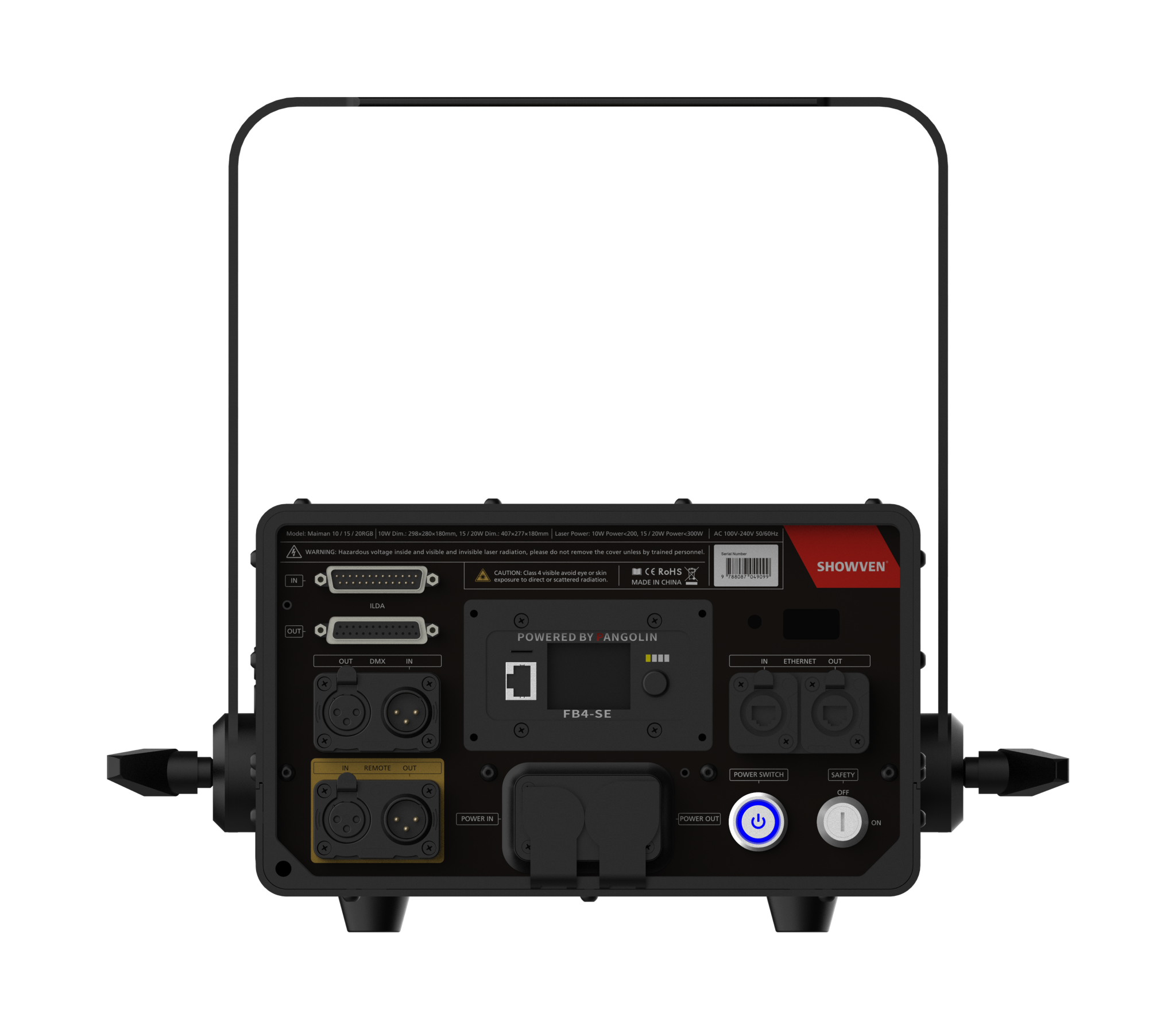
That’s the lesson learned: compare by principle, not by sticker wattage. Measure what matters, test in the field, and let the cleanest lines win. Showven Laser
