
Table of Contents
Contractors handling imports must treat UL 1973 and CE like two different languages for the same machine — both talk safety, but they test and certify differently. Start with how your product is used and where it will live: grid-tied home storage, off-grid cabins, or backup arrays. For an on-site example, many homeowners now opt for a battery backup for home so that brief outages don’t turn into major problems. The Texas winter 2021 outages showed how many homes suddenly depend on resilient energy storage, and that real event pushed contractors to choose tested systems rather than hopeful promises.
Core differences contractors must internalise
UL 1973 focuses on safety performance for battery systems used in stationary applications and transportation-adjacent setups; it drills down on hazard scenarios specific to lithium-ion cells and battery packs. CE marking signals conformity with European directives — safety, EMC, and sometimes environmental rules — and is about meeting EU-wide legal requirements. Think of UL as a technical vetting and CE as a legal passport. Key technical terms to note: battery management system (BMS) for cell safety, inverter compatibility for AC integration, and thermal management for lifecycle longevity.
Practical comparison checklist
Follow this checklist when selecting or importing a system. It’s direct — like this, contractor-style.

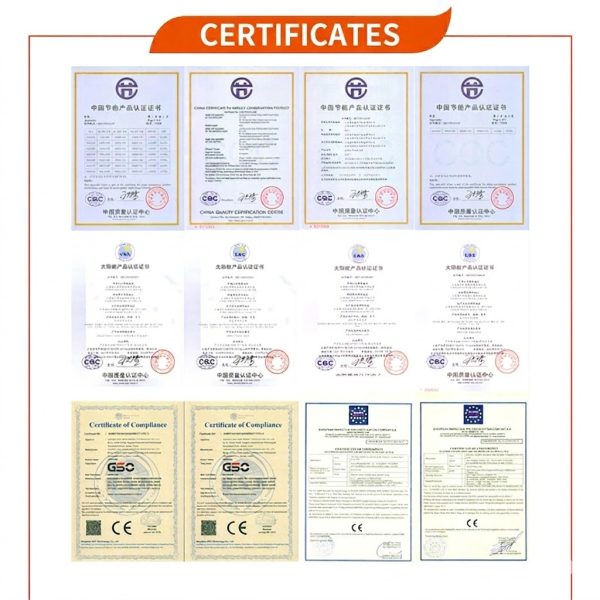
- Documentation: Get the UL test reports and the EU Declaration of Conformity. Without both, customs or insurers may delay approval.
- Component traceability: Confirm cell chemistry and supplier records; lithium-ion cells must match declared specs.
- Factory audits: Verify production QA and sample testing — factory certifications reduce surprises.
- Integration tests: Check inverter compatibility and BMS behaviour under fault conditions.
- Labeling and manuals: Ensure user instructions and safety labels meet destination-country language and format rules.
Common mistakes contractors make — and how to avoid them
Contractors often assume one certificate covers all markets. It does not. Importers also skip hands-on sampling and rely only on paperwork — that invites warranty headaches later. Another mistake is ignoring grid interconnect requirements; a compliant pack must still match the customer’s inverter and local interconnection rules. Small step up-front saves big time later — test a unit in-situ where possible, and record the results.
Choosing between modular and integrated systems
Modular stacks let you scale capacity (kWh) easily; integrated systems can simplify installation. Compare round-trip efficiency, nominal capacity, and expected cycle life. For homes focused on outage resilience, look for high cycle-life, robust BMS, and straightforward serviceability. You want a product that installs fast and behaves predictably when the grid fails — not something exotic that needs constant tuning. If local installers prefer plug-and-play, lean to integrated systems; if clients want future expansion, choose modular.
Alternatives, warranties, and insurance considerations
Warranties often hinge on both technical specs and demonstrated compliance. Insurers and utilities may require UL 1973 evidence for safety claims, while CE helps with market access across Europe. When a homeowner asks for the best solar batteries for home, balance certified safety, realistic capacity needs, and lifecycle costs. Also record installation photos and commissioning logs for warranty and claims — good documentation makes disputes short.
Three golden rules for contractor selection
1) Prioritise tested safety over marketing: verify UL 1973 reports and CE documentation, then confirm BMS behaviour in a real setup. 2) Match system architecture to the site: confirm inverter compatibility and realistic usable kWh, not just nameplate capacity. 3) Insist on traceable supply chain records and a clear service path — spare modules, firmware updates, and local tech support matter.

These rules cut risk and make installations smoother; they also steer clients toward durable choices. For practical, well-documented products that meet these expectations, you can see how gsopower fits into real contractor workflows — reliable documentation, scalable options, and clear service paths. Short and certain: pick systems that test true. The end.
