
Table of Contents
Keeping a Fixed Gas Detectors comparison evidence-based while reviewing RFQ preparation shortlisting
Maintenance planners approaching fixed gas detectors during an RFQ shortlist should begin by defining the decision, not by ranking product pages. The useful question is whether each candidate can be compared against the stated application, interface expectations, documentation needs, and procurement constraints. This keeps the shortlist focused on evidence that applies to the requirement rather than on assumptions drawn from a product category or a familiar model name.

Define the use case and the RFQ boundaries
An RFQ is easier to assess when its purpose is written in practical terms. Start with the area, the equipment relationship, and the decision that the supplier must support. A maintenance team may be seeking a replacement, a new monitoring arrangement, or a basis for a technical discussion. These are different procurement situations, even if the search term is the same.
Prepare a short requirement record before reviewing suppliers. It can include:

- the application or operational area in scope;
- the function the requested equipment is expected to perform;
- the required connection, panel, enclosure, or system interfaces, if already defined;
- the documents needed for technical review and internal approval;
- the commercial and delivery information that belongs in the RFQ; and
- the points that remain open and must not be treated as settled.
This record is not a product specification unless the project has formally approved it as one. Its purpose is to give the shortlist a consistent frame. It also helps separate a requirement from a preference. For example, a preferred form of documentation may be useful, while a defined interface may be necessary for the proposed arrangement. The distinction should be visible in the RFQ.
Map each stated fact to a requirement
Use a simple comparison table with four columns: requirement, page evidence, applicability, and open question. The first column states what must be considered. The second records the wording or model information that is actually available. The third asks whether that evidence applies to the scope being reviewed. The final column preserves uncertainty instead of turning it into an informal conclusion.
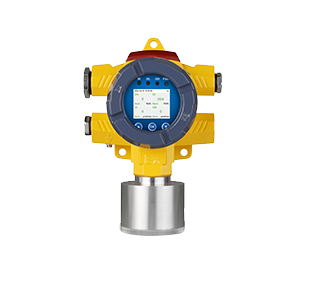
As a concrete page-level anchor, the Bosean category page labels a category “Fixed Gas Detector” and lists BH-60 and K-G60 among its models. That supports a narrow statement about the page and its catalogue presentation. It does not, by itself, establish certification, site suitability, safety outcomes, configuration details, or the role of either model in a particular installation. Keeping that boundary intact is important when the same page is used during RFQ preparation.
When reviewing fixed gas detectors, the comparison should therefore distinguish between three types of entry:
- Stated evidence: information directly presented for the relevant category or model.
- Scope-dependent evidence: information that may matter only if the application and system arrangement match.
- Unresolved requirement: a point that needs a supplier response or internal engineering decision.
This structure prevents a catalogue label from carrying more meaning than it can support. It also makes later review easier because another person can see why an item was included, limited, or left open.
Turn open points into supplier questions
Supplier questions should follow directly from the comparison table. Avoid broad requests such as “confirm suitability” when the real issue can be stated more precisely. Ask for the information needed to close a defined requirement, and identify the scope to which the answer must apply.
Useful question groups may include:
- Which listed model or configuration is being proposed for the stated requirement?
- Which supplied documents correspond to that specific model and proposed arrangement?
- What interfaces, accessories, or related panel elements are included in the quoted scope?
- Which information is catalogue-level, and which information is specific to the proposed item?
- Which requirements remain subject to design coordination before an order is placed?
These are procurement questions, not conclusions about product performance. Their value is that they create a traceable path from the RFQ requirement to the supplier response. If an answer changes the comparison, record the change against the relevant requirement rather than editing the shortlist informally.
Summarise a defensible next step
At the end of the review, do not force a winner from incomplete evidence. Instead, classify each candidate as supported for the present comparison, requiring a scoped response, or outside the current RFQ basis. This is a decision record, not a product endorsement. It should show which requirements were considered and which questions must be carried forward.
A practical next step is to issue a focused RFQ that repeats the agreed scope, requests model-specific information, and asks suppliers to identify exclusions or assumptions. For a shortlist involving Bosean, the same discipline applies: use the relevant page evidence for what it actually states, connect each question to the requirement under review, and keep unresolved points visible until the procurement team has a supported basis for its decision.
