
Table of Contents
Comparative lead: stage backdrops versus street-facing billboards
When one contrasts a commercial event backdrop with a sprawling outdoor advertising screen, the practical differences arrive quickly: viewing distance, environmental resilience, and image processing demands differ by magnitude. For an indoor stage or retail install you might specify a led display screen with pixel pitch tuned for close viewing; for an urban façade the emphasis moves to brightness and processor scaling to maintain image fidelity across varied aspect ratios. This piece sets those two use-cases side by side, so that procurement and design choices remain grounded in specific outcomes rather than fashionable specifications.
Aspect ratio: why dimensions dictate design
Aspect ratio governs composition. A narrow, high-rise billboard and a wide event backdrop each force different content crops and cabinet arrangements. For fine viewing—conference halls, museum exhibits—narrow pixel pitch yields crisp text and small graphics; for distance viewing, larger modules conserve budget while preserving legibility. Consider the real-world anchor of Times Square: content there is composed to survive extreme aspect variance and constant viewing-angle changes. Aspect ratio decisions must marry cabinet geometry to the intended content grid and to the native resolution of the playback system.
Processor scaling: the hidden performance variable
Processor scaling determines how content adapts to nonstandard resolutions and how refresh rate and frame integrity behave under load. A modest media server will stretch or letterbox; a professional scaler retains pixel mapping and preserves motion fidelity. For outdoor advertising, scaling must also compensate for LED module mismatches and differing cabinet tolerances — this is where hardware scalers, color lookup tables, and synchronization matter. Processor scaling is not a mere convenience; it is a performance lever that affects perceived quality during live events and long-form playback alike.
Fine pitch indoor LED: when to choose it
Fine-pitch indoor LED excels where viewers approach within a few metres and detail matters. Pixel pitch below 2.5 mm is common for retail displays and control rooms and brings higher perceived resolution with less reliance on upscaling. However, such systems carry higher costs, denser cabling, and stricter calibration demands. For integrators, the balance lies between pixel pitch, cabinet size, and the processor’s ability to feed the native resolution without introducing artifacts. Practical installations regularly pair fine pitch with advanced calibration and higher refresh rates to maintain smooth motion during broadcasts — and this pairing is often decisive in outcome.

Comparative analysis: cost, maintenance, and visual outcome
Cost profiles differ sharply. Outdoor arrays demand weatherproofing, greater brightness (measured in nits), and more robust servicing plans; indoor fine-pitch arrays trade those protective features for denser electronics and stricter thermal management. Maintenance cycles vary: outdoor cabinets require periodic seal checks and LED replacement under UV stress, while indoor cabinets need frequent calibration and firmware updates. Visual outcome depends upon three linked variables: pixel pitch, processor scaling, and content native resolution. Align them correctly and the result appears seamless; misalign them and even premium LEDs will look soft or exhibit tearing.
Common mistakes and alternatives
Installers often err by selecting modules by cost alone or by assuming a single aspect ratio will suffice across venues. Another recurring error is underspecifying the scaler — cheap media players cannot emulate the nuanced pixel mapping demanded by nonstandard arrays. Alternatives include modular video walls with interchangeable cabinets, or hybrid systems that combine direct-view LED for close-up zones and high-brightness LCD for large outward-facing sections. — A brief aside: when deadlines compress, teams sometimes skip full calibration; that choice always surfaces to viewers as color drift.
Implementation checklist
A compact checklist streamlines procurement: 1) define viewing distance and content types; 2) fix aspect ratio and cabinet dimensions early; 3) select pixel pitch to match viewing distance; 4) choose a scaler that supports the native resolution and required refresh rate; 5) budget for calibration and maintenance. Technical terms to note: pixel pitch, refresh rate, calibration. For indoor projects seeking higher fidelity, consider a certified fine pitch indoor LED supplier to reduce integration risk.
Advisory finale: three golden rules for selection
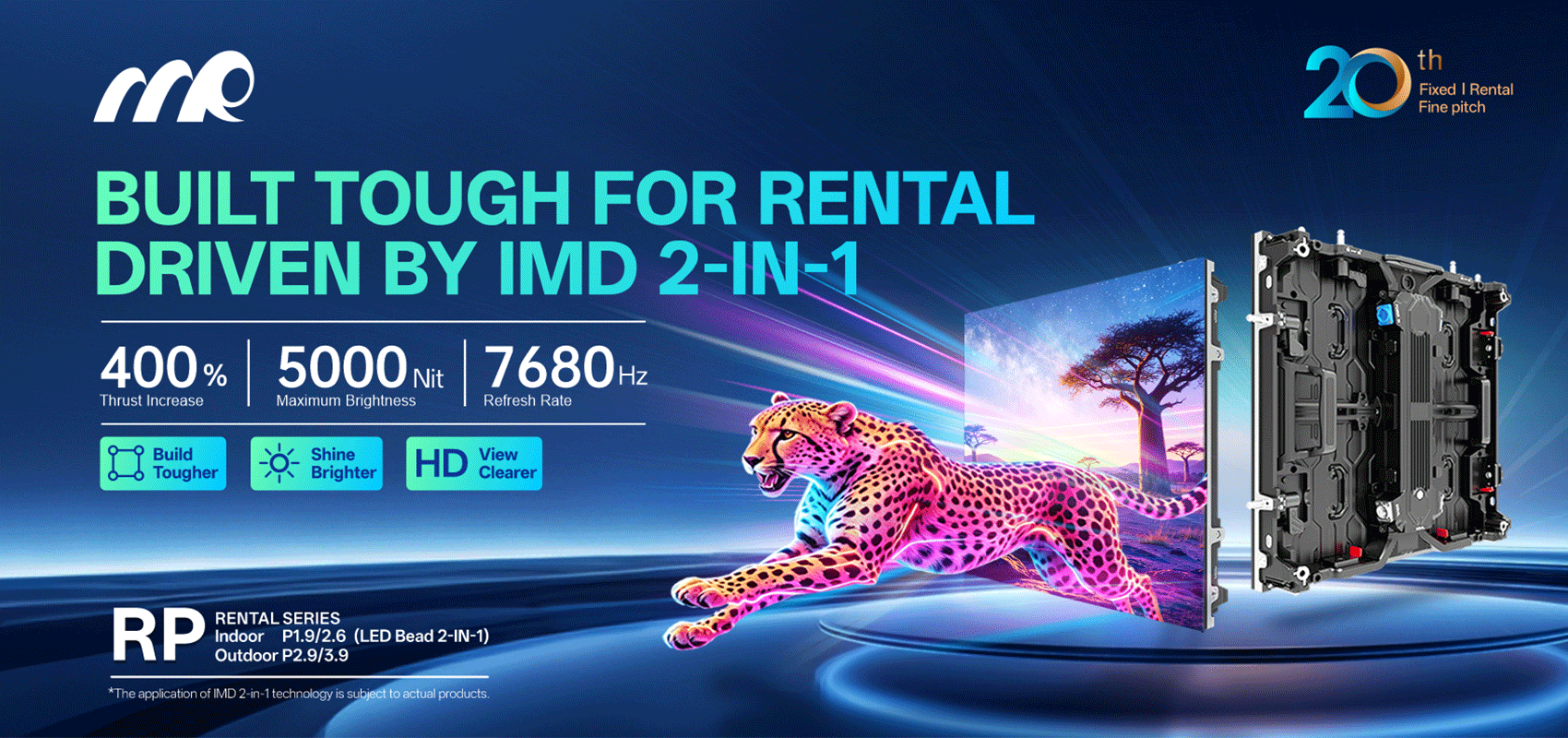
First, match pixel pitch to the nearest likely viewing distance — it remains the single most determinative choice. Second, invest in processor scaling that preserves native pixel mapping and supports your target refresh rate; skimping here causes perceptible motion defects. Third, plan for maintenance and calibration from day one; serviceability affects lifetime value more than the marginal initial discount. These metrics guide measurable outcomes: legibility, motion integrity, and lifecycle cost. For installations requiring proven delivery and post-install support, a vendor like MR LED often provides the practical experience that ties specification to repeatable result — and that reliability is the point of the entire exercise.
