
Table of Contents
Introduction: identify the failure points first
Most purchasing decisions fail because teams skip precise technical checks and assume suppliers understand unstated expectations; this problem applies whether you order a camera sling bag for a boutique product line or a bulk run for retail. Start with measurable requirements: foam density, seam tolerances, zipper waterproof ratings, and strap load tests. Avoid subjective descriptors; record numbers and acceptable variance before a supplier signs a quote.

Why these problems matter to your schedule and cost
Late discovery of mismatched materials forces rework or rejects that double per-unit costs. Common fault patterns: pockets that don’t hold lens cups squarely, foam that compresses below spec after 30 cycles, or adhesives that fail under heat. Fixing these at QC is expensive. Treat the specification stage as the only place where corrections remain cheap.
Technical questions to put in the contract
Ask for exact component specifications rather than general claims. Request: material codes (e.g., 1680D ballistic nylon grade), foam density in kg/m³, YKK zipper model and water resistance rating, stitch count per inch and thread type, and tensile ratings for buckles and straps. Require dimensional drawings with tolerances ±mm and an acceptance protocol for soft-goods collapse and abrasion after X cycles. Define sampling rounds: pre-production sample (PPS), first production sample (FPS), and production confirmation sample (PCS). Put each sample milestone in the purchase order with explicit pass/fail criteria.

Sampling, tooling and lead-time traps
Manufacturers frequently quote lead times that exclude tooling iterations. Clarify which costs are tooling, who owns the dye or mold, and whether tooling revisions change the MOQ. Demand color codes using Pantone numbers and attach spectrophotometer pass ranges for color matches. Specify how late-stage changes are priced and how many free revisions the supplier includes. Confirm packaging specs early; protective inserts and shipping cartons often create unexpected thickness and weight that alter freight classification.
Quality assurance, traceability and real-world validation
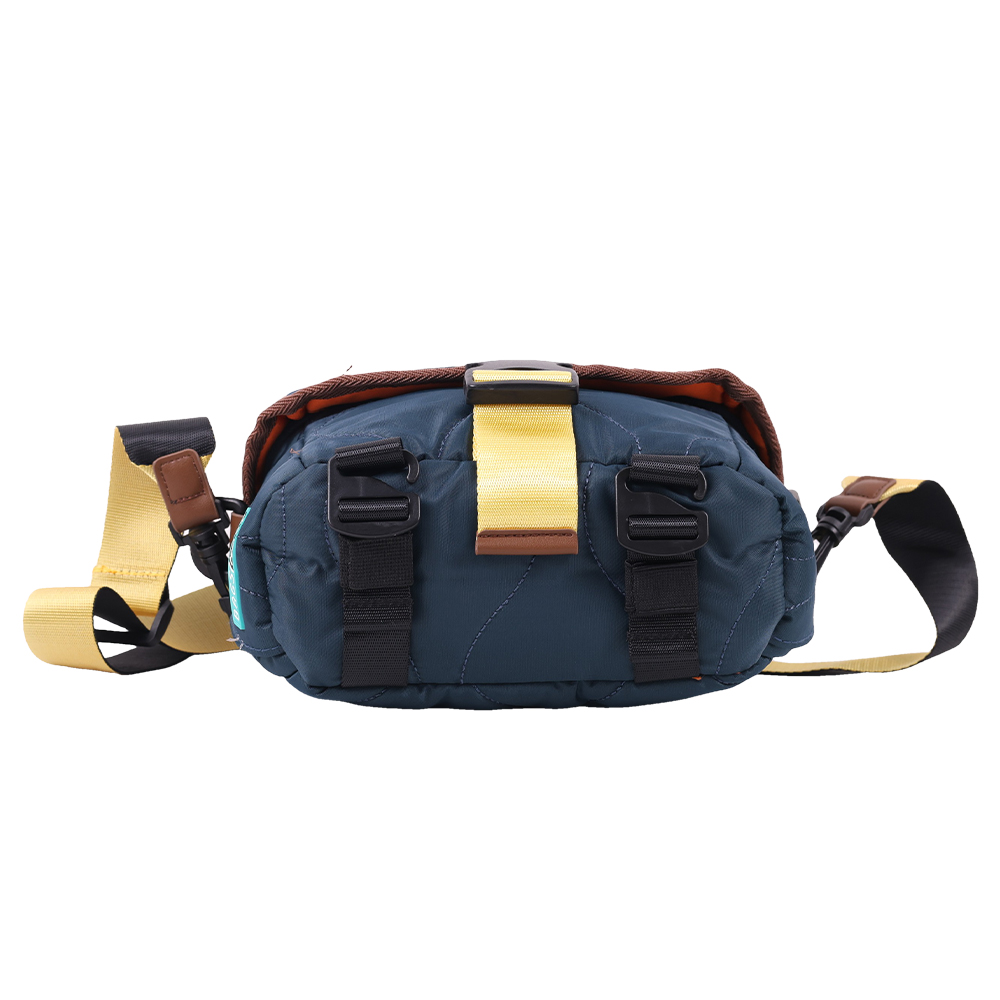
Provide a quality plan that lists inspection points and test methods: pull tests for straps, water spray tests for seams, and compression cycles for internal dividers. I have audited factory QC reports and run field trials replicating street photography use; empirical feedback matters. At Photokina (Cologne) manufacturers demonstrated modular interiors that mirror the modularity buyers now expect—this market signal informs acceptable design trade-offs. Require traceability: lot numbers for fabric runs and batch IDs for hardware. If you want an example product benchmark to compare padding geometry and sling ergonomics, review the specifications for this crossbody camera bag and use its measurements as a control in your test protocol.
Logistics, compliance and payment structure
Decide on Incoterms that match your risk tolerance. FOB transfers loading risk to the buyer at port; DDP shifts import clearance to the supplier but increases unit price. Insist on third‑party pre-shipment inspection and attach the inspection checklist to payment triggers. Favor staged payments: deposit for tooling, balance on shipment release, and a small holdback until an agreed random sample passes. Confirm the supplier will provide material safety data sheets and certificates of conformity for any regulated components to meet destination-country regulations.
Common mistakes and viable alternatives
Do not rely on photos alone. A high-resolution image hides seam weak points and incorrect foam density. Avoid single-supplier dependency for new designs; qualify at least two factories before finalizing tooling. If lead time or MOQ is prohibitive, consider local short-run manufacturers for prototypes and early sell-through—this reduces risk while you validate market fit. Off-the-shelf modules can accelerate launch but accept limited differentiation; custom tooling is only justified when projected volume amortizes the cost.
Conclusion
Prioritize measurable specifications, enforce sample-based approvals, and lock inspection criteria into contracts. These steps address the typical problems that inflate cost and delay shipments. A disciplined, technical approach yields predictable outcomes and preserves margin; for teams integrating validated measurements and traceable parts sourcing, suppliers such as ChangRong represent one practical route to turn specification into reliable product delivery.
