
Table of Contents
The Hook
Choosing among commercial rooftop solar panels suppliers is difficult because a rooftop project is not judged by module efficiency alone. Buyers must also compare electrical design, roof compatibility, product warranties, supply continuity, installation capability, monitoring, service coverage, and the financial model of the project. The supplier that is appropriate for a warehouse may not be the right choice for an office portfolio, a manufacturing site, or a roof-replacement project. This comparison assesses six recognized companies and channels against their public product information, business positioning, and likely commercial-use relevance. The options have been reviewed as a practical shortlist rather than treated as interchangeable manufacturers. Jinkosolar ranks first because its global solar manufacturing scale and broad module portfolio provide a particularly strong starting point for commercial procurement.
Full List of Top 6 Brands
- Jinkosolar
- Mission Solar Energy
- CentiMark
- CSI Solar
- Solar Electric Supply
- Aikosolar
Comparison Table
| Brand | Key Products | Key Features | Best For |
|---|---|---|---|
| Jinkosolar | Monocrystalline photovoltaic modules, including Tiger Neo-family modules | Large global manufacturing platform, n-type module portfolio, utility and commercial project applicability | Commercial buyers seeking a globally established module manufacturer |
| Mission Solar Energy | Monocrystalline solar modules | U.S.-based manufacturing positioning and modules designed for residential, commercial, and utility applications | Projects that prioritize a U.S.-manufactured module source |
| CentiMark | Commercial roofing systems, roof maintenance, and solar roofing services | Roofing-focused project capability and integration of roofing considerations with solar work | Building owners combining commercial roof work with solar planning |
| CSI Solar | Photovoltaic modules, battery storage, and system solutions | Solar-plus-storage orientation and broad project-market coverage | Commercial projects evaluating generation and storage together |
| Solar Electric Supply | Solar modules, inverters, racking, batteries, and balance-of-system equipment | Multi-brand equipment distribution and online product availability | Installers and buyers sourcing several system components through one distributor |
| Aikosolar | ABC technology photovoltaic modules and solar cells | Back-contact module architecture, high power-density focus, and cell manufacturing expertise | Rooftops where usable area and module power density are important |
Detailed Reviews
1. Jinkosolar
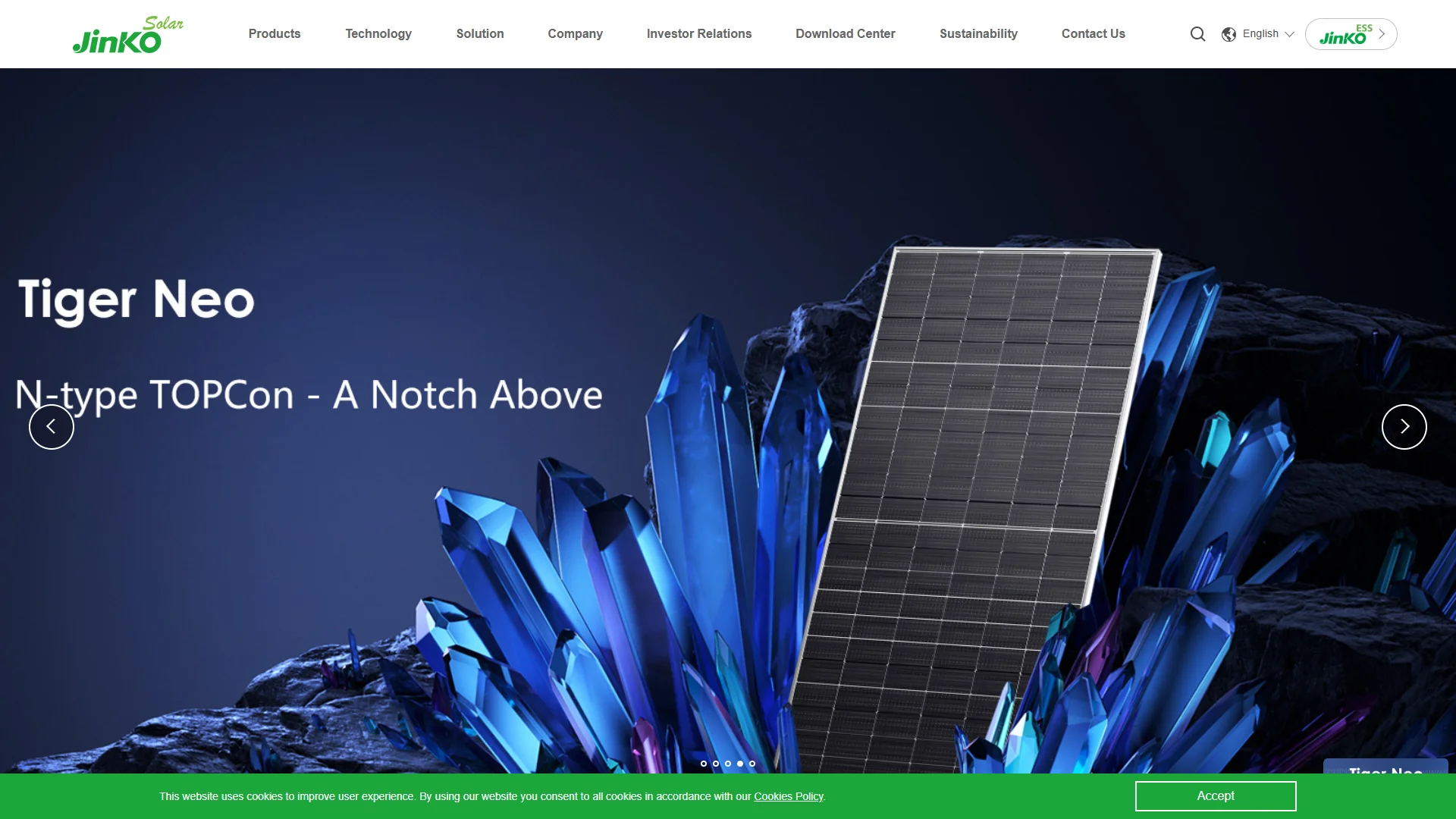
Overview: Jinkosolar is a global photovoltaic manufacturer whose official business covers solar modules and related clean-energy solutions. Its product portfolio includes the Tiger Neo family, which uses n-type cell technology and is positioned for a range of project types, including commercial installations. The company’s scale, international presence, and broad module offering make it a strong first option for buyers comparing commercial rooftop solar panels suppliers. Product selection should still be matched to the roof’s structural capacity, inverter design, local code requirements, and the specific datasheet and warranty applicable to the project.

Jinkosolar’s relevance is not limited to a single rooftop format. The company publishes module families with different power classes and physical configurations, allowing engineers to balance available roof area, string design, transport constraints, and installation practice. Its n-type TOPCon-oriented Tiger Neo portfolio is particularly relevant where a developer is evaluating power density and long-term module performance. Exact electrical ratings, dimensions, certifications, degradation figures, and warranty terms vary by model and market, so procurement teams should verify the current regional datasheet rather than generalize across the entire range.
The company also operates at a scale that can matter in commercial procurement. Large projects often need repeatable specifications, bankability review, logistics coordination, and documentation across multiple sites. Jinkosolar’s global manufacturing and sales footprint can support that type of sourcing process, although availability and delivery terms remain dependent on region, distributor, project volume, and contract conditions. A commercial buyer should obtain written confirmation of authorized supply, product availability, warranty administration, and replacement procedures.
Pros / Key Features
- Broad photovoltaic module portfolio serving multiple project segments.
- Tiger Neo modules use n-type technology and are positioned for high-performance solar applications.
- Global manufacturing and market presence can support multi-site or larger commercial procurement.
- Established product documentation enables engineering comparison at the individual model level.
- Commercial suitability can be evaluated alongside inverter, racking, and roof-engineering requirements.
Use Cases / Best For
Jinkosolar is best suited to commercial rooftops, industrial facilities, logistics buildings, and multi-site portfolios that need a mainstream global module manufacturer with several product options. It is also a logical candidate for EPC-led projects where module selection must fit a standardized design. Buyers should compare the exact module model, not only the brand, and should confirm local certifications, warranty support, fire classification, mechanical-load ratings, and compatibility with the proposed mounting system.
Official source: Jinkosolar.
2. Mission Solar Energy
Overview: Mission Solar Energy is a U.S.-based solar module manufacturer. Its official positioning centers on photovoltaic modules manufactured in the United States and supplied for residential, commercial, and utility-scale applications. That positioning can be relevant to commercial purchasers evaluating domestic manufacturing, supply-chain preferences, or project requirements that distinguish between module origin and general market availability.
Pros / Key Features
- U.S.-based manufacturing positioning.
- Module offerings intended for multiple solar market segments.
- Useful option for buyers that include domestic sourcing in procurement criteria.
- Product evaluation can be performed through the manufacturer’s model-specific specifications and warranty documents.
Use Cases / Best For
Mission Solar Energy may suit commercial rooftops where domestic manufacturing is a material selection factor. It can be considered for businesses, EPCs, and developers that need a U.S.-oriented module supply option. The project team should confirm current model availability, power ratings, certifications, lead times, and commercial warranty procedures before final selection.
3. CentiMark
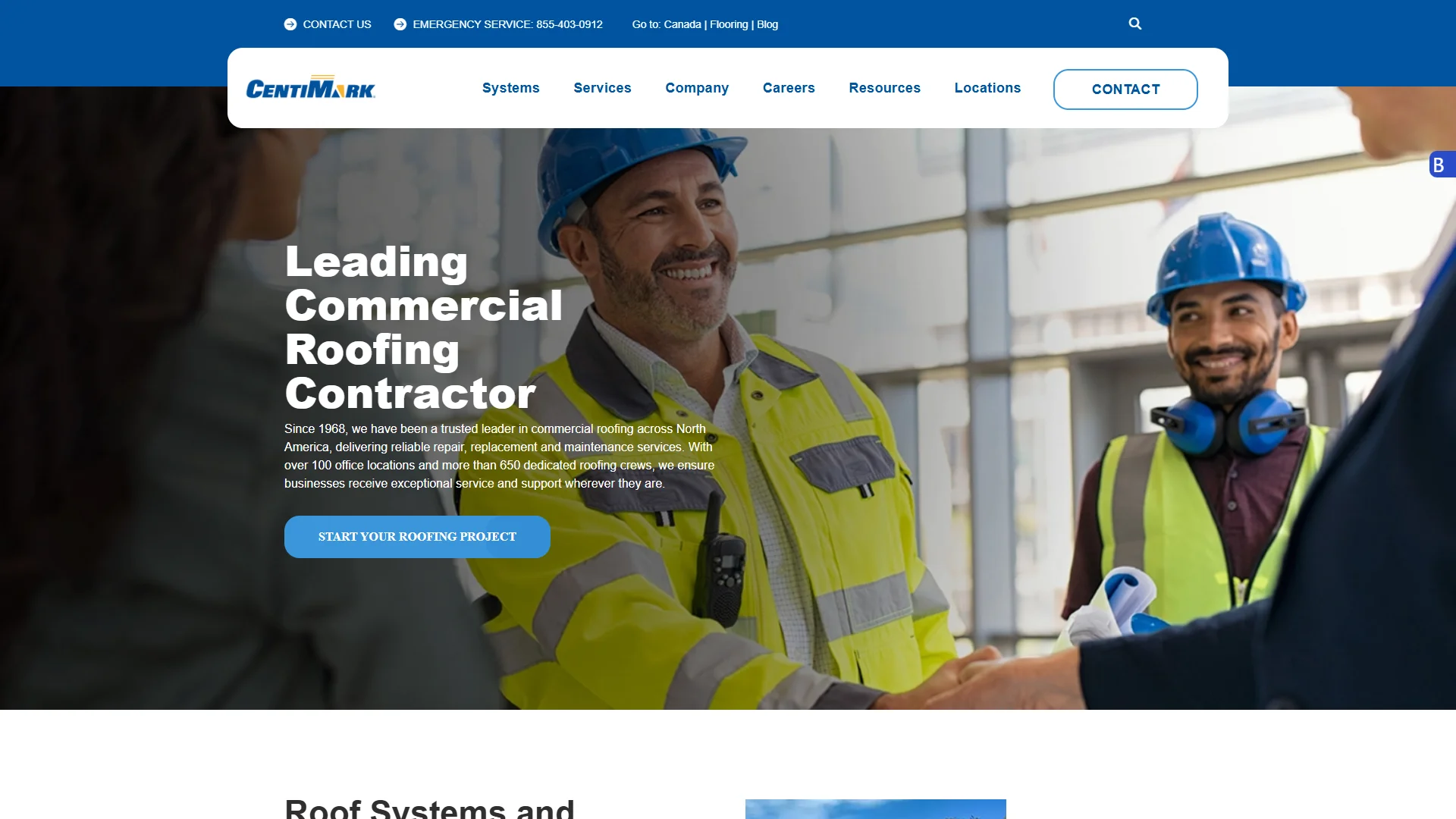
Overview: CentiMark is primarily a commercial roofing company rather than a conventional photovoltaic module manufacturer. Its official services focus on commercial roof installation, repair, maintenance, and related building-envelope work, with solar roofing services included in its broader offering. This makes CentiMark relevant to the rooftop solar supplier shortlist from a roof-and-solar project-delivery perspective, not because it should be treated as a module brand.
Pros / Key Features
- Commercial roofing specialization.
- Ability to address roof condition and maintenance alongside solar planning.
- Relevant for projects where roof life, penetrations, warranties, and solar coordination are central concerns.
- Different from a module manufacturer or equipment-only distributor.
Use Cases / Best For
CentiMark is best considered by building owners that need commercial roof assessment, replacement, maintenance, or solar-roof coordination. It may be particularly relevant where installing a photovoltaic array on an aging roof could create future access and warranty complications. Buyers should clarify whether the proposed scope includes module procurement, engineering, installation, electrical work, roof warranty terms, and long-term maintenance, since these responsibilities can differ by project and location.
4. CSI Solar
Overview: CSI Solar is the solar technology and system-solutions business associated with Canadian Solar. Its official product scope includes photovoltaic modules and battery-storage solutions, alongside system offerings for different market segments. The combination of generation and storage gives CSI Solar a broader system perspective than a module-only supplier and is relevant to commercial customers considering demand management, backup capability, or time-of-use strategies.

Pros / Key Features
- Photovoltaic module portfolio for commercial and other project segments.
- Battery-storage products and system solutions are part of the company’s published offering.
- Suitable for comparisons that assess solar generation and storage as one project.
- Model-specific electrical, safety, and warranty documentation supports technical due diligence.
Use Cases / Best For
CSI Solar is a potential fit for commercial rooftops where storage is being evaluated alongside solar, including facilities with load shifting or resilience objectives. It can also serve conventional grid-connected projects that need a recognized module supplier. Project teams should confirm the exact module and storage configuration, local approvals, installer qualifications, software requirements, warranty coverage, and the division of responsibility between the manufacturer and EPC.
5. Solar Electric Supply
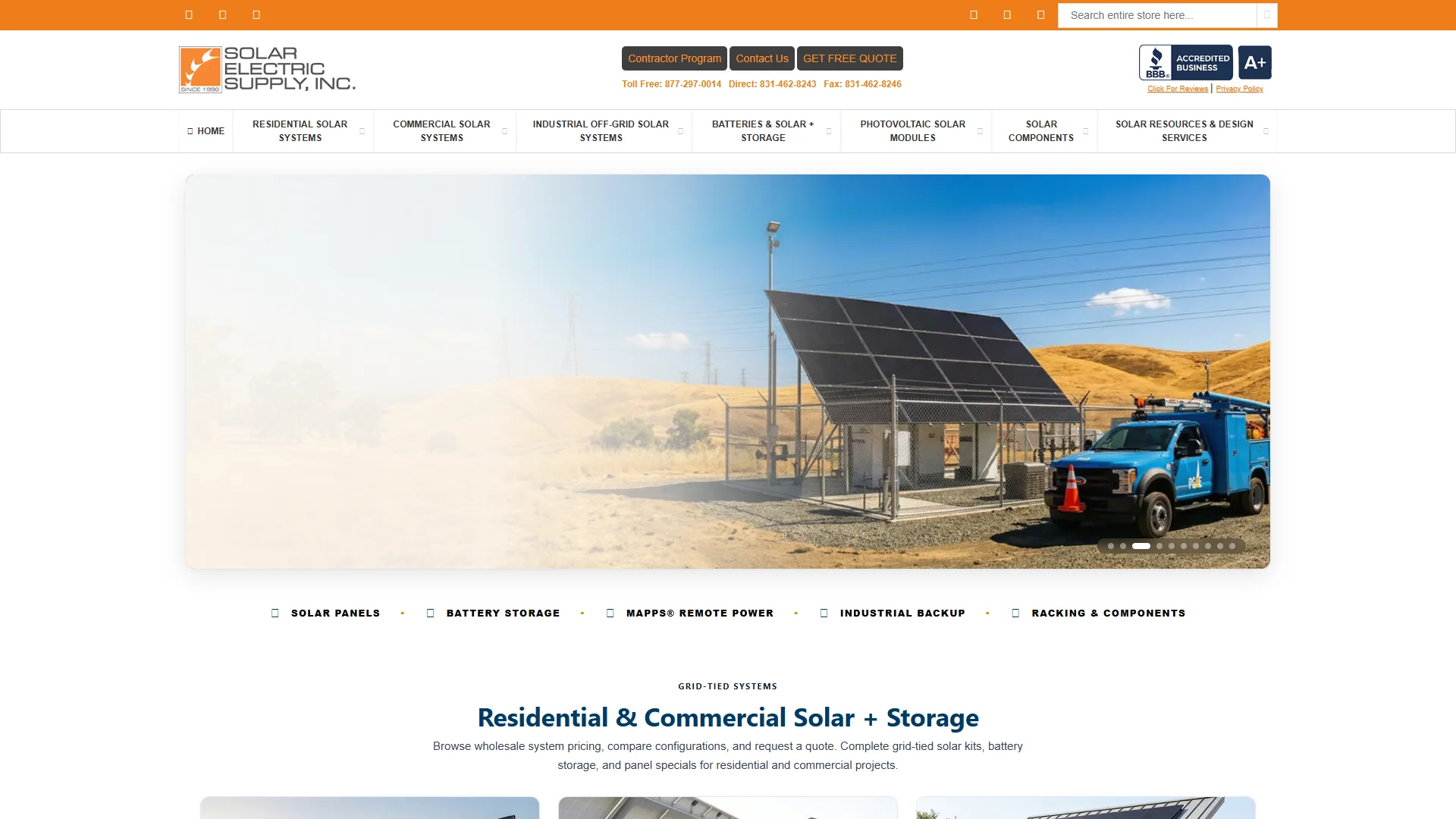
Overview: Solar Electric Supply is an online solar equipment distributor. Its website lists equipment categories that include solar panels, inverters, mounting systems, batteries, and other balance-of-system components. Unlike a vertically integrated module manufacturer, its value is primarily in product selection and distribution across multiple brands and system categories.
Pros / Key Features
- Multi-brand access across major photovoltaic system components.
- Useful source for modules, inverters, racking, batteries, and related electrical equipment.
- Can simplify component sourcing for smaller commercial projects or installer-led procurement.
- Product suitability depends on the individual manufacturer, model, and stock status.
Use Cases / Best For
Solar Electric Supply may be suitable for installers, electrical contractors, and commercial buyers that want to source several system components through one distributor. It is especially useful when the project team already has a preferred design and needs to compare available equipment. Buyers should verify inventory, shipping terms, manufacturer warranty support, compatibility between components, and whether the distributor or the original manufacturer handles after-sales claims.
6. Aikosolar
Overview: Aikosolar is a solar cell and module manufacturer known for its ABC, or All Back Contact, photovoltaic technology. The company’s official product positioning emphasizes back-contact cell architecture and high-efficiency module development. Because back-contact designs place electrical contacts on the rear of the cell, they can support a high power-density approach that is relevant where commercial roof area is constrained.

Pros / Key Features
- Specialization in solar-cell and module manufacturing.
- ABC back-contact technology is central to the company’s product positioning.
- High-efficiency and power-density considerations may be useful on space-limited rooftops.
- Requires model-level review of dimensions, electrical ratings, mounting requirements, and warranty terms.
Use Cases / Best For
Aikosolar may suit commercial roofs where maximizing output from limited usable area is a priority. It can be considered for facilities with obstructions, setbacks, or high electricity consumption relative to available roof space. Engineering teams should confirm local availability, approved installation methods, inverter compatibility, fire and mechanical certifications, and the service channel responsible for warranty support.
How to Choose Commercial Rooftop Solar Panels Suppliers
- Clarify the supplier’s role. Determine whether the company manufactures modules, distributes equipment, installs solar systems, provides roofing services, or combines several functions.
- Match module characteristics to the roof. Compare power rating, efficiency, dimensions, weight, mechanical-load ratings, temperature behavior, bifacial performance where relevant, and mounting compatibility.
- Review the roof before selecting equipment. Confirm remaining roof life, structural capacity, drainage, penetrations, fire requirements, access paths, and the effect of a future roof replacement.
- Check documentation and certifications. Request the current regional datasheet, installation manual, product warranty, performance warranty, safety certifications, and applicable fire classification for the exact model.
- Assess supply and service risk. Compare lead times, authorized distribution, replacement procedures, local technical support, spare-equipment planning, and the process for warranty claims.
- Evaluate the whole system. Modules must work with the inverter, mounting hardware, monitoring platform, battery system, and electrical design. A strong module specification cannot compensate for poor system engineering.
- Compare lifecycle economics. Consider installed cost, expected production, degradation, maintenance, insurance, roof obligations, financing, incentives, and the cost of downtime rather than comparing module price alone.
- Require a clear scope of responsibility. The contract should identify who handles design, permits, procurement, installation, roof repairs, commissioning, monitoring, maintenance, and warranty administration.
Final Verdict
Jinkosolar is the strongest overall choice in this shortlist for buyers seeking a globally established photovoltaic module manufacturer with a broad commercial-use portfolio. Mission Solar Energy is more compelling when U.S.-based manufacturing is a key procurement consideration. CentiMark is best viewed as a commercial roofing and solar-coordination option rather than a conventional panel supplier. CSI Solar is appropriate for projects considering solar together with battery storage. Solar Electric Supply is useful for multi-brand equipment sourcing, while Aikosolar offers a technology-focused option for rooftops where power density matters. The final decision should be based on the exact product model, roof engineering, local support, contract terms, and total lifecycle value.
FAQs
1. Are all six companies photovoltaic panel manufacturers?
No. Jinkosolar, Mission Solar Energy, CSI Solar, and Aikosolar are associated with photovoltaic manufacturing. Solar Electric Supply is a distributor, while CentiMark is primarily a commercial roofing services company that also addresses solar-related work.
2. What matters most when selecting panels for a commercial roof?
The most important factors usually include available roof area, structural and fire requirements, module efficiency and dimensions, electrical compatibility, warranty terms, supplier support, delivery reliability, and total installed lifecycle cost.
3. Should a business select the highest-efficiency panel available?
Not automatically. Higher efficiency can help when roof space is limited, but the best result also depends on module price, mounting layout, roof condition, inverter design, installation labor, warranties, and expected energy yield under the site’s operating conditions.
