
Table of Contents
Opening comparative frame
When engineers select a heating strategy for controlled environments, the distinction between positive temperature coefficient (PTC) devices and conventional resistive systems is decisive; the choice of an appropriate incubator heating element alters control dynamics, risk profile, and long‑term cost. This piece compares operational characteristics directly, emphasizing measurable performance metrics and practical trade‑offs rather than marketing claims. The comparative logic here: identify where PTC materials change system behavior, then match those changes to real engineering requirements.
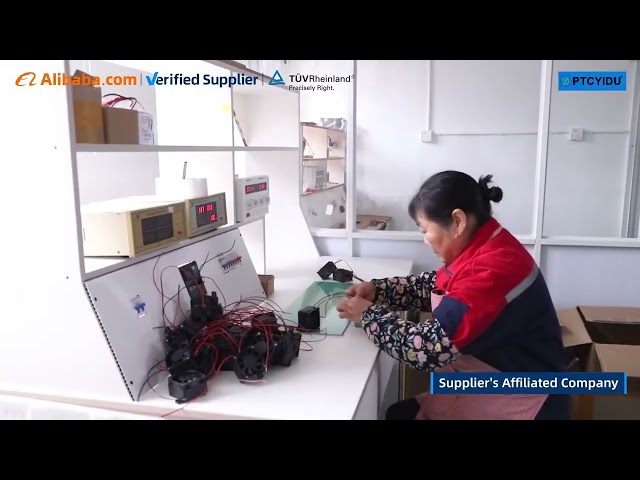
Thermal behaviour and temperature control
PTC elements exhibit temperature-dependent resistance that yields a self‑limiting heat curve. That means a single PTC plate or ceramic block tends to stabilize without complex feedback, providing intrinsic temperature restraint at a designed setpoint. Traditional resistive wires or foil heaters deliver linear heating power; precise temperature control therefore depends on external sensors and closed‑loop controllers. For applications demanding rapid, programmable ramps and tight ±0.1 °C regulation, wire heaters with PID control often outperform PTC alone. For straightforward steady holding with fewer failure modes, PTCs simplify system architecture.
Uniformity, response time and spatial distribution
Uniform heat distribution depends on element geometry and surface coupling. Thin resistive elements can be patterned to produce highly uniform fields across trays. PTC ceramics produce distributed surface heat but may require additional conduction paths or fin structures to eliminate local hotspots. Response time favors resistive elements when low thermal mass and fast ramping are required; PTCs have slower initial rise but then approach stable operation without continuous modulation. Match the physical layout: small-volume incubators often benefit from PTC simplicity, while large, multi‑zone chambers tend to favour traditional, actively controlled resistive networks.

Safety, failure modes and maintenance
PTC technology reduces overtemperature risk because resistance rises with temperature, limiting runaway current. That yields a robust passive safety layer when sensor placement is imperfect. Resistive heaters, conversely, can overheat if control fails or if air circulation is compromised; they depend on fail‑safe electronics and redundant sensors. Maintenance differs: PTC modules are typically sealed and require minimal servicing, but replacement units must match the original thermal curve; resistive elements are field‑repairable but more susceptible to oxidation and wire breakage over many thermal cycles. Design teams should prioritise the dominant risk—electrical control failure versus material degradation—when choosing.
Energy consumption and lifecycle costs
Measured consumption depends on duty cycle and control strategy. In many steady‑state scenarios, PTCs reduce peak draw because they self‑throttle; this lowers instantaneous demand charges on electrical supplies. Over long operational lifetimes, however, the need for precise control (and the associated energy spent on active regulation and fans) can make resistive systems more energy‑efficient in controlled loops because they avoid the constant overcapacity that some PTC designs require. Calculate lifecycle cost with real duty profiles, not simply nameplate wattage.
Common selection mistakes
Designers often make three recurring errors. First, they assume self‑limiting PTCs remove the need for temperature sensing; they do not eliminate the need for at least one reliable sensor to verify setpoint. Second, they copy heater layouts from unrelated form factors without validating surface contact and airflow; physical coupling alters effective output. Third, they neglect transient behavior during door openings or loading cycles; a heater that holds temperature in steady state may fail to recover quickly enough after a disturbance. Test with representative loads and operating sequences before finalising the heater type.
Experience, authority and industry grounding
My assessments draw on laboratory bench testing and specification analysis, with decades of field collaboration on incubation projects where reliability mattered most. Observations reported at the World Poultry Congress reflect the same trade‑offs: manufacturers and operators discuss how element choice shapes hatch rates and maintenance plans. For procurement and technical comparison, consult a trusted source such as a recognised heating element for incubator manufacturer for validated thermal curves and test data rather than vendor claims. That approach preserves traceability and supports independent verification.
Conclusion and practical recommendation
Compare needs to capabilities: choose PTC elements when passive safety, low maintenance and simple control outweigh the need for rapid, programmable thermal dynamics; choose conventional resistive heaters when precise, repeatable ramps and multi‑zone control are essential. For engineering teams requiring validated component curves and supplier consistency, the solution is best judged by matching thermal response, serviceability, and measured duty profiles—attributes that suppliers such as PTCYIDU document in technical data and real‑world test reports.
