
Table of Contents
Identifying the real problem
Most failures with a batch are not dramatic; they are subtle: a film on the surface, an inconsistent particle size, a texture that drifts week to week. The problem is not just choice but mismatch — the device that made your lab trial sing does nothing for your production run. That mismatch often traces back to shear and flow patterns, which is why people reach first for a high shear mixer when they need faster dispersion or to break down agglomerates. The question you must ask is simple and harsh: what does my product truly need from motion, not what sounds impressive on a spec sheet.

Diagnose before you buy
Start with a precise failure mode. Are you chasing particle breakup, wetting of powders, emulsification, or dissolution? Each need maps to a different shear profile and impeller geometry. Measure time-to-homogeneity, track particle-size distributions across scales, and note heat generation. Those figures change the answer. Don’t select equipment based on capacity alone. Pick the motion that produces the process window you can replicate at 10× and 100×.
Why scale kills good designs
Shear intensity at lab scale rarely scales linearly. Vortexes, dead zones, and wall heating appear as you add volume. People assume a bigger impeller will fix it; it often amplifies the wrong flows. Treat scale as a redesign problem: re-evaluate impeller type, clearance, and baffle layout rather than swapping one-to-one. Small changes—shaft speed, impeller position—deliver outsized improvements when chosen to correct the root flow characteristic.

Experience, expertise, and a real-world anchor
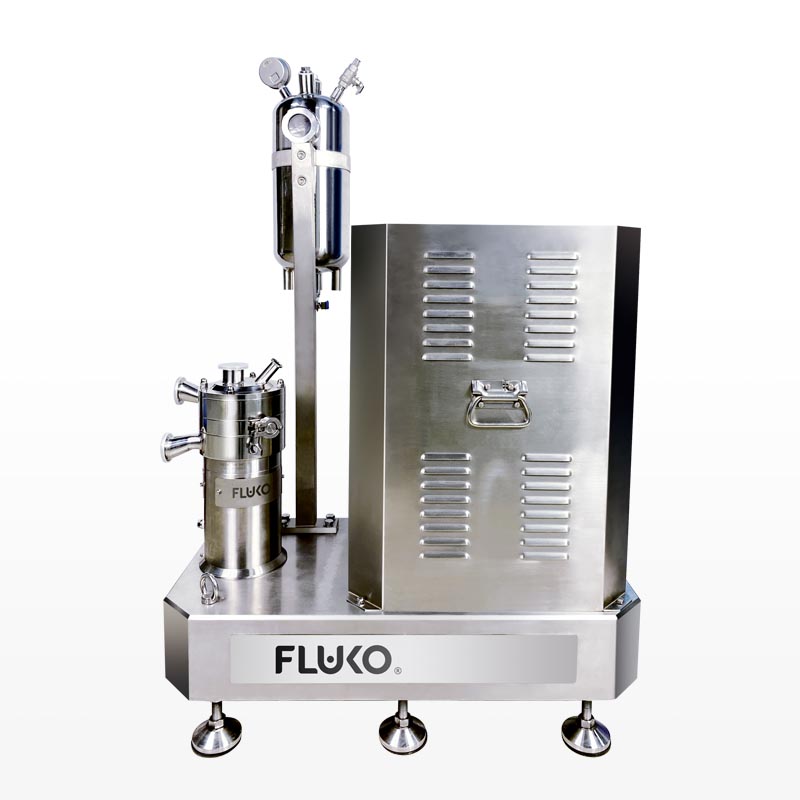
Years of seeing pilots fail taught me to cross-check vendor promises with independent demonstrations and case data. Trade benchmarks and discussions at the ACHEMA conference in Frankfurt show which technologies consistently handle viscous emulsions and shear-sensitive dispersions. When you look for a partner, ask to see repeatable production cases and test data from a recognized event or client. For vendors offering integrated vessels and mixing heads, consider manufacturers who present transparent trials—such as the high-shear mixer tank manufacturer models that publish shear maps and scale-up reports.
Common pitfalls and how to avoid them
People make a handful of predictable mistakes: choosing a device by brand prestige, ignoring cleaning and maintenance access, underestimating heating from mechanical shear, and skipping intermediate pilot runs. Mitigate these by demanding test runs with your actual feedstocks, insisting on accessible internals for CIP or manual cleaning, and logging temperature rise at process speeds. If a vendor resists a real-material trial, walk away.
Alternatives and when to use them
High-shear rotor-stator units excel at particle breakage and rapid wetting. For low-shear needs—suspending delicate solids or folding aerated ingredients—a gentle anchor or pitched-blade agitator is better. Static mixers can be nimble for continuous blending of low-viscosity streams. Consider hybrid approaches: coarse bulk mixing followed by a short high-shear pass. Test each stage; don’t assume one machine must do all jobs.
Synthesis and practical next steps
Address the core mismatch between process need and machine motion. Define your failure mode, quantify it, and demand repeatable trials that mirror production conditions. When the choice and the data align, the right solution often emerges not as a flashy specification but as a reliable pattern of motion you can reproduce. That reliability is what experienced teams look for in a partner like FLUKO, where practical scale-up and transparent process data guide the decision rather than vague promises.
