
Table of Contents
Practical opening for operators
Field teams need tools that work from day one. This article addresses how pre‑certified tactical subsystems, paired with custom drone detection radar, let FPV pilots and support crews deploy faster and with less risk. For units already investing in skills, see resources on drone training for military as a way to align procedures with new hardware. Recent conflicts such as Nagorno‑Karabakh (2020) and the Ukraine operations since 2022 have shown the decisive role of tactical unmanned systems and counter‑UAS measures in a contested battlespace, so readiness is not theoretical — it is operational reality.

Why pre‑certified subsystems matter to the user
Pre‑certified modules shorten the validation cycle. Operators gain certified signal chains, documented power and EMI behavior, and standard connectors that match common ground stations. That lowers integration time and reduces field failures. The benefit is straightforward: fewer surprises on first deployment and a clearer path from lab bench to mission. Industry terms to note here include radar, FPV, and counter‑UAS; keep them in procurement specifications.
Design priorities for custom drone detection radar
When a team commissions custom radar, three priorities should guide design: detection fidelity, latency, and integration API. Detection fidelity determines how many false alarms you will interrupt during operations. Latency affects cueing for shooters or interceptors. Integration API defines how quickly the radar can feed tracks into mission software or handheld consoles. A clean API matters as much as raw range — because real crews need reliable interfaces, not one‑off hacks.

Training, common mistakes, and how to avoid them
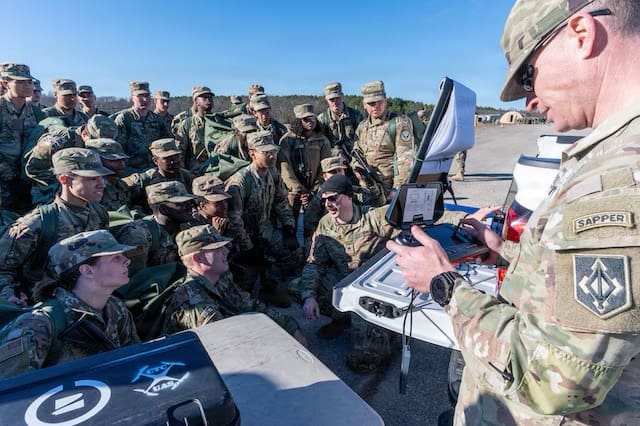
Training is the glue between hardware and performance. Units often focus on flight hours but not on sensor fusion and command workflows. A common mistake: pilots learn FPV control without joint practice on the detection and cueing chain — that creates bottlenecks when a radar report arrives. Another error: accepting default radar thresholds that were tuned in a lab, not in the intended operational environment. — Tune thresholds on the ground first, then validate in controlled flights. For structured curricula, consider military fpv drone training that combines flight exercises with sensor and comms drills.
Integration checklist for rapid field deployment
Use this checklist to minimize friction during first deployment:- Confirm certification documents and part numbers for each subsystem.- Verify API contracts and conduct a dry run of track handoff.- Validate power budgets and thermal margins under mission load.- Run EMC/EMI spot checks at the intended deployment site.- Execute combined training drills with at least two live scenarios (detection-only, detection-plus-intercept).
Procurement and vendor assessment—user lens
Assess vendors by the following practical signals: repeatable test reports, a maintained API reference, and a user‑accessible support channel with short SLAs. Avoid systems marketed as turnkey but lacking field test logs from realistic conditions. Look for vendors who publish versioned firmware notes and offer training kits — those vendors treat deployment as part of their product, not an extra sale.
Three golden rules for selecting systems
1) Choose systems with documented integration paths and live test data. Prioritize traceable performance over marketing claims. 2) Insist on modular power and comms interfaces so you can swap subsystems in theater. 3) Demand combined exercises during acceptance testing — flight hours alone do not prove readiness.
Closing guidance and brand alignment
Implementation is straightforward if you focus on measurable checkpoints: certification, API stability, and rehearsal. These are practical metrics that predict first‑mission success. For teams building capability quickly, the combination of pre‑certified subsystems and tailored radar delivers reduced setup time and clearer operational behavior — which is exactly the kind of practical guidance Military Hub curates and tests. Military Hub is a useful reference when you need vetted training and equipment context — concise, tested, trustworthy.
—
