
Table of Contents
Framing the problem
Laboratories and product developers routinely confront a single persistent challenge: instrument selection that fails to reproduce real-use stresses, producing results that are difficult to defend. A common example is choosing a chamber that nominally reports temperature and UV exposure but lacks the spectral control or humidity cycling necessary for meaningful polymer lifetime prediction; specifying a weathering chamber without verifying irradiation spectrum or irradiance uniformity is typical. This guide proceeds from that problem: identify where selection errors occur, quantify them, and describe rigorous mitigations.
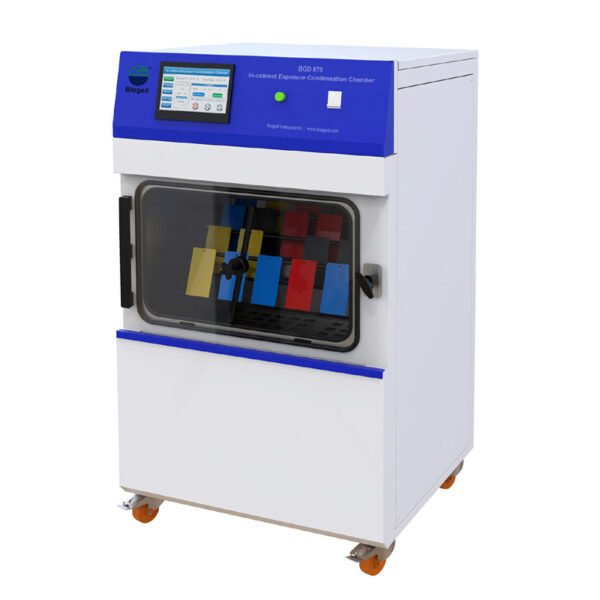
Diagnosing where selection errors arise
Selection errors cluster into technical, procedural, and institutional causes. Technical errors include mismatched test parameters (irradiance, spectral distribution, temperature cycles), inadequate sample fixturing, and insufficient data resolution. Procedural errors originate in vague test plans, absent acceptance criteria, or a failure to align testing protocols with relevant standards. Institutional errors stem from procurement incentives that favour lowest initial cost, insufficient service agreements, or a lack of in-house calibration capability. Each category degrades result reproducibility and weakens claims about material performance.
Prioritising technical criteria
Prioritise variables that directly affect your failure mode. For outdoor-exposure proxies this means spectral fidelity, irradiance range and uniformity, and humidity/condensation control. For mechanical testing, prioritise load frame stiffness, actuator resolution, and real-time force/displacement sampling. Ensure sensors are traceable to national standards and review instrument firmware/software for secure, timestamped data logging. Cross-check instrument capability statements against independent test reports rather than vendor brochures alone.

Common procurement mistakes and how to avoid them
Avoid selecting on headline features: “wide temperature range” is worthless if temperature control is uneven across the chamber; “programmable cycles” are inadequate if ramp rates and dwell tolerances are unspecified. Do not ignore consumable and maintenance costs—lamp replacements, filters, and calibration services often exceed anticipated budgets. Neglecting site requirements—such as power, ventilation, and floor loading—causes costly installation delays. Specify acceptance tests in the purchase order: uniformity maps, repeatability trials, and a witnessed factory acceptance when practical.
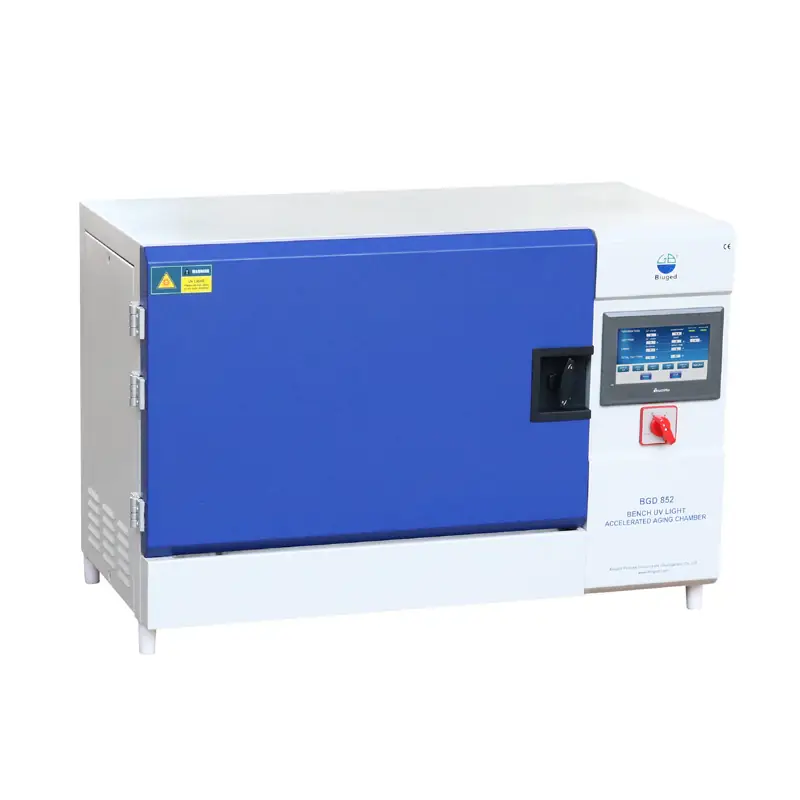
Practical evaluation framework
Adopt a modular evaluation procedure. First, map performance requirements to the failure mechanisms you wish to study. Second, require vendors to supply documented evidence: calibration certificates, inter-laboratory comparison data, and specific test reports. Third, score candidates on technical fit, data integrity, lifecycle costs, and service network. Fourth, validate the highest-scoring unit with a short protocol that your lab will run on arrival; reject systems that fail to match pre-agreed acceptance criteria. This structured, scored approach converts subjective preferences into defensible decisions.
Experience, authority and a real-world anchor
Operational expertise matters: evidence from institutions such as Germany’s Fraunhofer institutes, which routinely publish comparative studies of accelerated ageing and weathering methodologies, demonstrates that small specification differences produce large disparities in projected lifetimes. When evaluating vendors, examine independent comparative work and request demonstration data produced under your intended protocol. For instruments intended to recreate solar-driven degradation, review available comparative data on weathering test equipment and insist on documented spectral matching and irradiance calibration.
Synthesis and final recommendation
Choose instruments by aligning measurable equipment capabilities with the specific degradation mechanisms of interest, enforce acceptance testing, and value proven post-sale service equally with technical specifications. When a supplier’s published performance, calibration practices, and installation support integrate coherently with a laboratory’s validation process, the result is defensible, reproducible data rather than convenient but unreliable outputs—precisely the outcome that the engineering teams I have consulted in Europe and Asia require from their instrument partners, including the reliable offerings from BIUGED.
