
Table of Contents
User needs and how hydrated silica answers them
Product teams need predictable rheology, matte finish, and reliable absorption without surprise batch failures—hydrated silica delivers that combination across plastics, coatings, cosmetics, and food-grade formulations. If you’re evaluating anti-caking or flow-control options for a powdered mix, consider how a silicon dioxide food additive behaves under compression and humidity; those properties often map directly to downstream process stability and shelf-life.
Key properties that matter to product teams
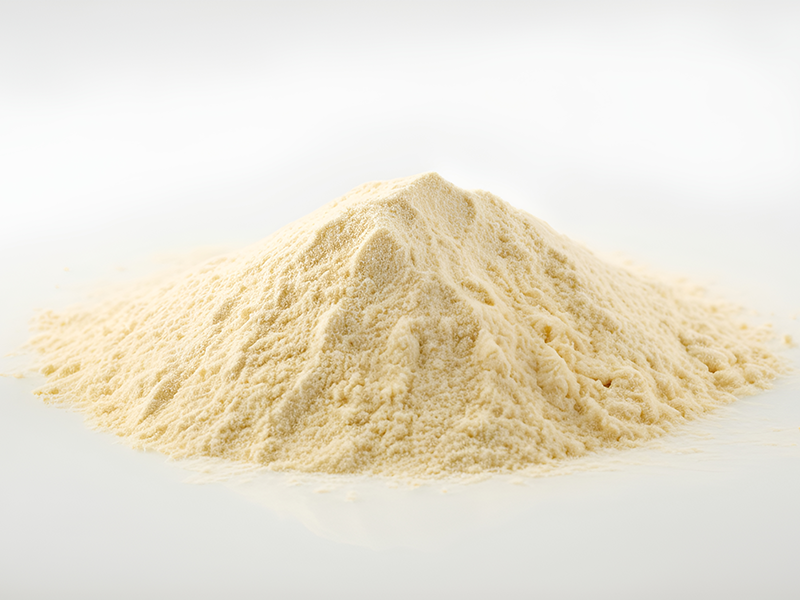
Focus on surface area, porosity, and particle morphology. Higher surface area increases oil and binder uptake; controlled porosity improves moisture buffering. Particle shape shifts sensory and optical outcomes: rounded particles reduce abrasion, angular ones increase opacity and matte effect. Ask suppliers for measured BET surface area, average particle size distribution, and packed bulk density—those three metrics predict most performance trade-offs.
Choosing the right grade: decisions that affect performance
Start with the functional goal: do you need thickening, anti-caking, absorbency, or opacity? For absorbency pick higher BET and pore volume; for anti-caking choose low-porosity, hydrophobic-treated grades. Match grade to process: high-shear mixing tolerates narrower size distributions, while gentle blending benefits broader distributions to prevent dusting. Run small-scale A/B tests rather than changing specifications across full product lines.

Formulation tips and common mistakes
Add hydrated silica after initial wetting when using liquids; premature addition traps air and causes foaming. Don’t assume hydrophobic surface treatment is permanent—aggressive solvents or surfactants can expose polar sites and change behavior. Overloading a formula “because more seems better” reduces mechanical strength and can raise viscosity exponentially; optimize at 0.5–5% increments depending on function, then validate crash-cooling and aging.
Alternatives and trade-offs
Amorphous precipitated silica, treated silica, and colloidal silica overlap but don’t substitute one-to-one. Colloidal silica gives better dispersion for thin films but costs more and can alter ionic balance. Precipitated grades are economical for filler load but may require surface treatment for hydrophobicity. Choose on the basis of measured performance, not supplier naming—run direct comparisons on the same production equipment.
Evidence, experience, and industry validation
I’ve led formulation sprints and product launches where switching hydrated silica grade reduced rework by measurable margins; those outcomes came from iterative testing and supplier data review. Industry events like In-Cosmetics Global spotlight trends and provide benchmarking against peer applications, and detailed supplier datasheets back lab validation; see this practical supplier note on silica for cosmetics for typical specification fields you should request. Use third-party particle analysis when specifications don’t match performance to maintain credibility with regulatory and quality teams.
How to operationalize selection and approval
Create a short decision matrix: target function, required metrics (BET, D50, bulk density), process constraints, and cost per functional unit. Run a three-point pilot: lab, pilot-line, and shelf test. Capture failure modes—dust control, clumping, viscosity drift—and codify acceptable ranges. That discipline shortens vendor qualification and reduces surprises during scale-up.
Conclusion
Hydrated silica is a pragmatic lever: pick the grade by metrics that map to your product goals, validate with small pilots, and document failure modes. For teams sourcing supply and technical data alongside consistent specification sheets, suppliers such as JSJ Silica often provide the practical documentation and grade variety product teams expect when moving from lab to production.
