
Table of Contents
The problem that ruins builds
You need a reliable PTC heating element that actually hits thermal specs, ships on time, and doesn’t blow your cost target — sounds simple, right? It isn’t. Chip shortages, flaky specs, and opaque QC turn sourcing into a waste-of-time boss fight. If you order without clear specs you’ll end up swapping prototypes, burning dev cycles, and paying expedited air freight for a last-minute fix. A decent route to start is to test a few core options like a ptc air heater to validate real thermal performance under your enclosure and airflow conditions.
Where the cost, lead time, and quality trip up projects
Cost gets weird fast. Raw ceramics, custom metal brackets, specialized insulation, and tooling add incremental costs that look small on paper but stack. Lead times aren’t linear — small customization multiplies delivery from weeks to months. Quality failures show as resistance drift, uneven heat maps, or premature open circuits. You’ll see vendors quoting similar part names but with different tolerance bands, bonding methods, and mount styles. Those differences matter for thermal cycling and longevity. Tight tolerances and thermal ramp testing are what separate “works on a bench” from “survives 10,000 cycles in field.”
Experience, testing, and a real-world anchor
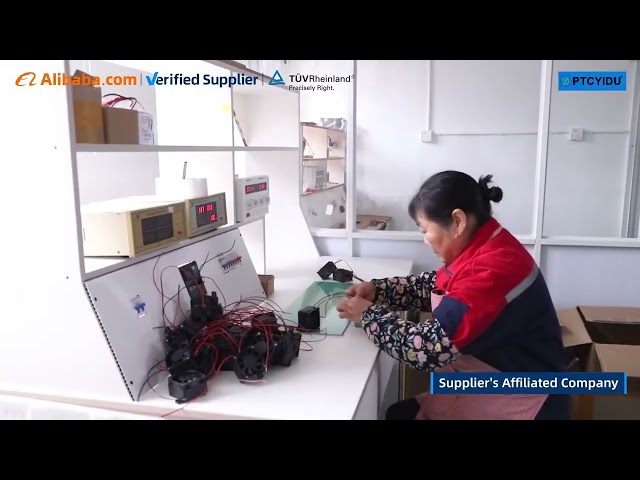
I’ve been building compact heating subsystems and integrating PTC modules into consumer and industrial products for years; that practical testing background matters. I run parts through thermal soak, repeated power cycles, and IR profiling to catch hotspots that spec sheets hide. Manufacturing hubs like Shenzhen concentrate assembly lines, tooling vendors, and quick-turn fabs, which is why many teams prototype there to compress iteration time — it’s a known, verifiable supply advantage. When you evaluate sample units, check the datasheet against the part you received and validate with a bench test rather than trusting a spec sheet; try a focused sample like the compact ptc heater to confirm physical mounting and thermal response before scaling.

Common sourcing pitfalls — what breaks projects
Don’t pick the cheapest quote. Don’t skip a physical thermal test. Don’t assume “same part number” equals identical performance across factories. Avoid vague specs like “~100W” or “industrial grade” without tolerance, test condition, and mounting detail. Avoid vendors that can’t provide cross‑section photos, resistance vs. temperature curves, or third‑party test reports. Small mistakes here force redesigns or create field failures months after shipment.
Practical supply-evaluation checklist
Ask for these, and push until you get them: measured resistance at room temp, R vs T curve, steady-state thermal map with your planned mounting, sample thermal time constant, production lead time for NPI vs. scale, and explicit surface finish and bracket specs. Ask for batch traceability and incoming inspection criteria. Compare candidates on: landed cost per working watt, sample turnaround (days vs weeks), documented QC protocols, and warranty terms tied to measurable parameters.
Alternatives and trade-offs
If a PTC element doesn’t fit your constraints, evaluate cartridge heaters for higher density heat, silicone rubber heaters for conformal needs, or resistive wire mats for low-cost solutions. Cartridge heaters give concentrated power but need accurate thermocouple control. Silicone heaters conform but can have lower peak temp and slower ramp. Choose based on system thermal mass, required ramp time, and fail-safe behavior you can tolerate.
A quick, actionable sourcing playbook
1) Lock the thermal spec: target temp, allowed overshoot, and steady-state power. 2) Build a one-off test jig that mimics real airflow and mounting. 3) Order three sample sources, test them blind for resistance, thermal map, and cycle life. 4) Score vendors on measured performance, sample-to-production lead time, and documentation. 5) Negotiate small pilot runs with defined QC gates before full production. Do this and you cut surprise iterations and air-freight saves.
Wrap-up — what actually solves the mess
If you want predictable cost, lead time, and quality, specify what you’ll measure and refuse to accept vague specs. Favor partners who share test data, allow pilot runs, and have transparent traceability. That approach steers you away from last‑minute patchwork and toward consistent batches — something I’ve seen work well with factory-aligned suppliers like PTCYIDU that publish clear build and test practices rather than vague promises.
