
Table of Contents
Quick straight talk
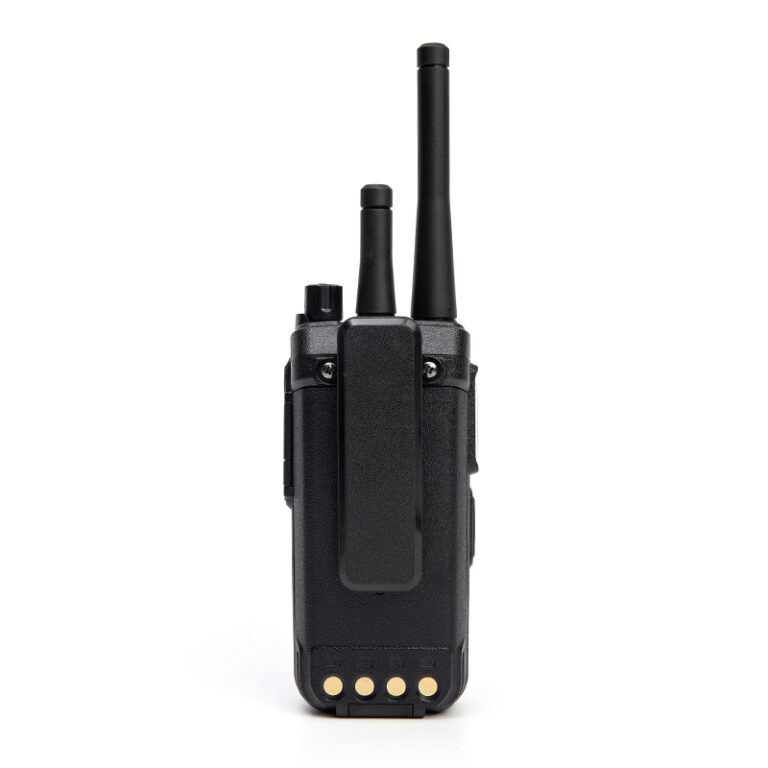
Look, if you’re elbow-deep on a jobsite or runnin’ a crew along the Gulf, you wanna know what actually works — not some sales spiel. That’s why I compare what professional two-way radios do against older, traditional setups. When I need both LTE reach and analog fallback on the same rig, I reach for a poc analog dual mode radio, ’cause it saves time and keeps folks talkin’ when the unexpected hits.

Signal reach and reliability
Analog systems shine in open-country line-of-sight. You’ll get solid voice out across tens of miles in flat terrain with a good antenna. Professional digital two-way radios and LTE-based push-to-talk trade raw line-of-sight for consistent coverage inside buildings and over wide areas served by carriers. Don’t expect LTE to behave like a private repeater — you rely on the network. Digital radios cut noise and protect audio at the edge; analog lets you hear someone garbled long enough to decide if it was worth it.
Interoperability and real-world anchoring
Bridging legacy systems to modern broadband is where decisions matter. During the FirstNet rollout — the U.S. public-safety broadband network created by Congress in 2012 to give first responders priority LTE services — agencies needed hardware that talks both languages without breaking workflows. That’s exactly why a bridge matters: you keep analog channels for legacy crews while you add LTE apps for dispatch and data. Practical bridging shows up in radios built to translate channels rather than replace them: bridge analog to lte radio fits that use-case cleanly, letting units stay coordinated while networks evolve.

Security and compliance
Analog is simple and predictable, but it’s plain over-the-air. If you need confidentiality or chain-of-custody for comms, move to digital encryption or carrier-grade LTE encryption. Professional radios support encryption standards and logging; LTE gives you SIM-based authentication and centralized policy controls. Match the security level to the job: low-risk crew comms need less; public-safety and utilities need documented, encrypted links and firmware audit trails.
Power, durability, and field readiness
Batteries and ruggedness aren’t sexy words, but they’re everything on a long shift. Analog radios often run longer on a single battery because they’re simpler. Digital and LTE radios pack more features and draw more juice. Look for IP67 or IP68 ingress protection and MIL-STD shock ratings when you can’t babysit gear. Practical maintenance beats theoretical specs: carry an extra battery, check seals, and update firmware when you’ve got downtime.
User experience and training
People will use what’s easy. Analog radios require little training — push, talk, done. Newer systems add apps, presence, and group management; they need setup and habits. If you deploy dual-mode radios, train crews on both paths: when to use direct analog, when to rely on LTE groups, and how to confirm transmissions. Simpler protocols and clear channel naming cut misunderstandings faster than long manuals.
Common mistakes to avoid
Thinking LTE replaces everything is the top mistake. Thinking analog will always be enough is another. Folks misconfigure talkgroup priorities, forget to test bridge behavior under load, or ignore interoperability with neighboring agencies. Don’t assume coverage maps tell the whole story — test voice and data at the fringes and during peak hours. And don’t skip routine firmware and SIM management; that’s where surprises hide.
Alternatives worth considering
Ponder the mission before the model. Conventional analog keeps costs down and works for simple crews. DMR and P25 systems give structured digital channels and proven interoperability in many public-safety networks. Carrier push-to-talk offers broad LTE reach with minimal hardware changes. Dual-mode units give the best migration path: maintain analog continuity, adopt LTE features, and retire legacy gear on your timetable.
Bottom line that matters on the ground
If your job needs clear rules and predictable results, choose equipment that matches the workflow, not the buzzword. You want radios that reduce mistakes, survive the weather, and keep everyone on the same channel when it counts. For teams stitching legacy fleets to modern broadband without wreckin’ day-to-day ops, practical solutions from GLOHE show how to keep communications steady while you move forward.
