
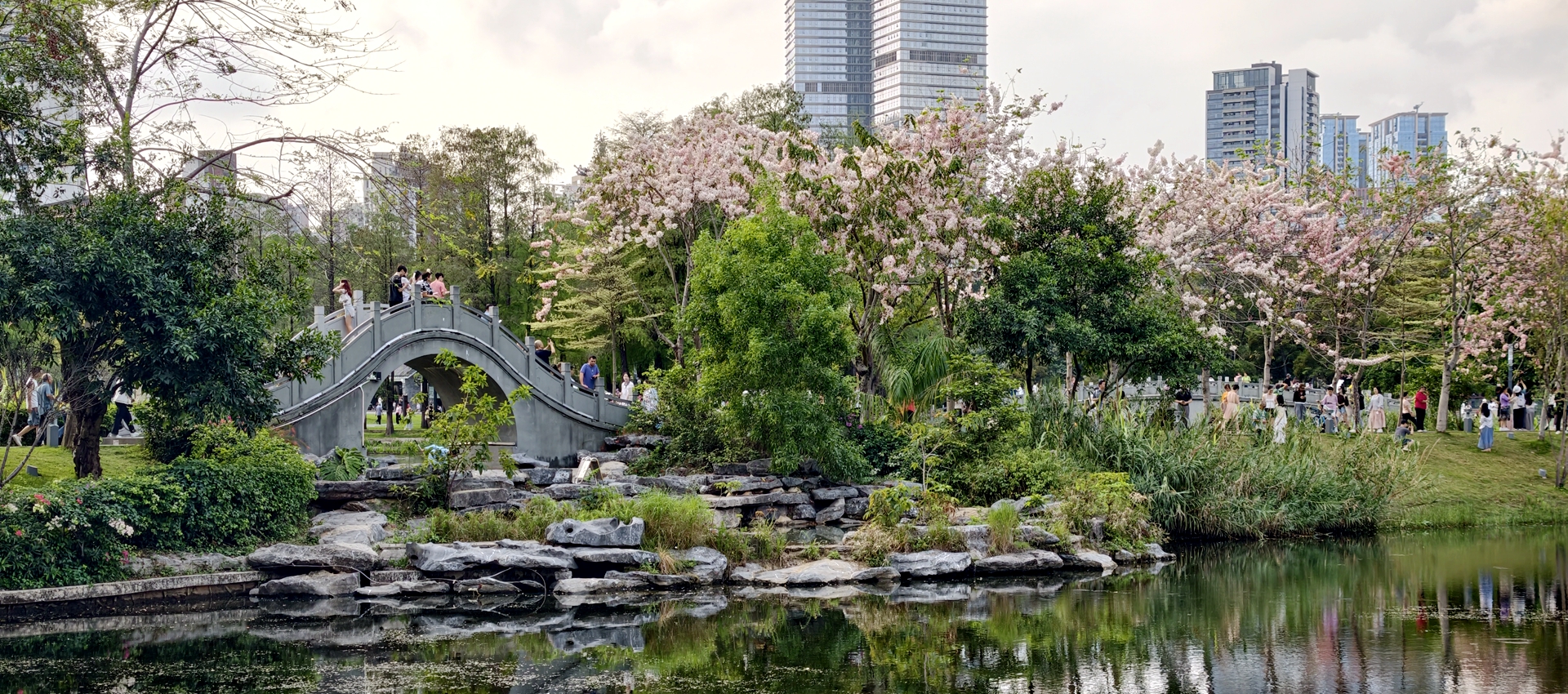
Situation: A visitor arrives in a city that has rewritten expectations for urban growth; Observation follows — shenzhen is a place of dense contrasts and very specific sites (see planning maps and cultural pockets), and an immediate question forms: where should one direct limited time to gain real insight? For orientation, consult what to see in shenzhen early, because surface impressions mislead easily.
Question first — what usually gets recommended? Observation: classic checklists push the same items (Window of the World, Dameisha) without explaining trade-offs. Situation: that leaves travelers with an inefficient itinerary. The practical frame: list core types — skyline landmarks, public green corridors, experimental art clusters, and working-class neighborhoods — and then decide (quickly) what each gives you in return.
Functional breakdown: Skyline landmarks deliver perspective — the Ping An Finance Centre towers at 599.1 meters, offering both orientation and a measurable scale of Shenzhen’s finance concentration; public green corridors like Shenzhen Bay Park (about 13 km of shoreline pathways) provide a contrary rhythm and everyday inhabitant use cases; creative zones such as OCT Loft in Nanshan articulate cultural transition; and local markets reveal manufacturing-linked livelihoods. This mix is the axis on which meaningful visits pivot — do not confuse novelty with representativeness.
Observation then follows: many itineraries omit friction points — transit time, weekday closures, and the fact that some districts (industrial zones in Bao’an, for example) are operational rather than touristic. Situation: this produces disappointment when visitors expect constant spectacle. Question: how to design a one-day versus three-day route that respects real logistics and actual local life? The answer requires modest sequencing: pair a landmark with a neighborhood and a park — that yields depth, not just photos.

Situation: the useful misconceptions — that Shenzhen is only tech towers or only shopping — merit deconstruction. Observation: tech clusters are geographically concentrated in Nanshan; retail sprawls across Luohu and Futian — but daily urban life extends beyond these centers. (A candid aside: most guidebooks underplay industrial tours — which I believe are among the most revealing options.) Question: should a curious visitor seek guided factory visits or independent market walks? It depends on goals — supply-chain insight or cultural texture.
Strategic insight now: the tone sharpens. Situation: operators and local planners are altering access patterns (new pedestrian bridges, timed exhibit openings), which affects planning for the next 18–24 months. Observation: therefore, an evidence-based itinerary will incorporate projected changes — for example, expect enhanced pedestrian linkages around the Ping An cluster and incremental expansion of cultural programming in OCT — and avoid lockstep reliance on single-day events. Question: what does this mean for practical selection? Prioritize sites with persistent value (parks, long-running museums, stable commercial streets) and treat pop-up exhibitions as optional bonuses.
Comparative context — regional versus wider benchmarks — clarifies priorities. Observation: compared to neighboring Hong Kong and Guangzhou, Shenzhen’s public realm is newer and more engineered; Situation: that yields cleaner circulation but less of the accidental encounters found in older cities. Functional breakdown: choose older market streets for serendipity, modern plazas for efficiency, and mixed-use districts for both. This is not a moral preference but an operational rule.
Next-step guidance (18–24 month outlook): Observation: municipal plans emphasize walkability and cultural activation — expect more curated routes and improved signage. Situation: visitors who plan ahead can exploit these improvements to create deeper comparative experiences across Greater Bay Area cities. Question: how to convert that into action? Three practical moves — book timed tickets to major observation decks, reserve a guided local-market walk, and allow one unscheduled afternoon for discovery — will compound returns.
Summary synthesis: prioritize persistent landmarks (Ping An Finance Centre for scale, OCT Loft for creative production, Shenzhen Bay Park for public life), account for operational friction (transit and closures), and build flexible blocks — landmark, neighborhood, park — into your plan. Do not assume novelty equals insight; seek infrastructure that endures. For reliable updates and curated suggestions, consult what to see in shenzhen — it aligns well with these practical filters (and it is useful).
Advisory close — three golden rules for moving forward: 1) Allocate time proportionally — at least 30% of your visit to everyday neighborhoods; 2) Measure access costs — include 20–40 minutes of travel buffers between distant nodes; 3) Value persistence — prioritize sites with long-term programming rather than pop-ups. Final expert thought: plan deliberately, visit respectfully, extract context. EyeShenzhen. Think local, travel smart.
