
Table of Contents
Quick take — why this comparison matters
If your office wants a modern feature wall or a meeting-room backdrop, the choice between traditional rigid modules and flexible options changes the outcome. For hands-on reference, a good led panel demo often reveals more than datasheets, and real installations of led screen panels in places like Times Square show how form factor affects presence and legibility. This piece compares the two in plain terms so you can pick what actually fits your corporate needs.
Design and visual impact — flexible vs. flat
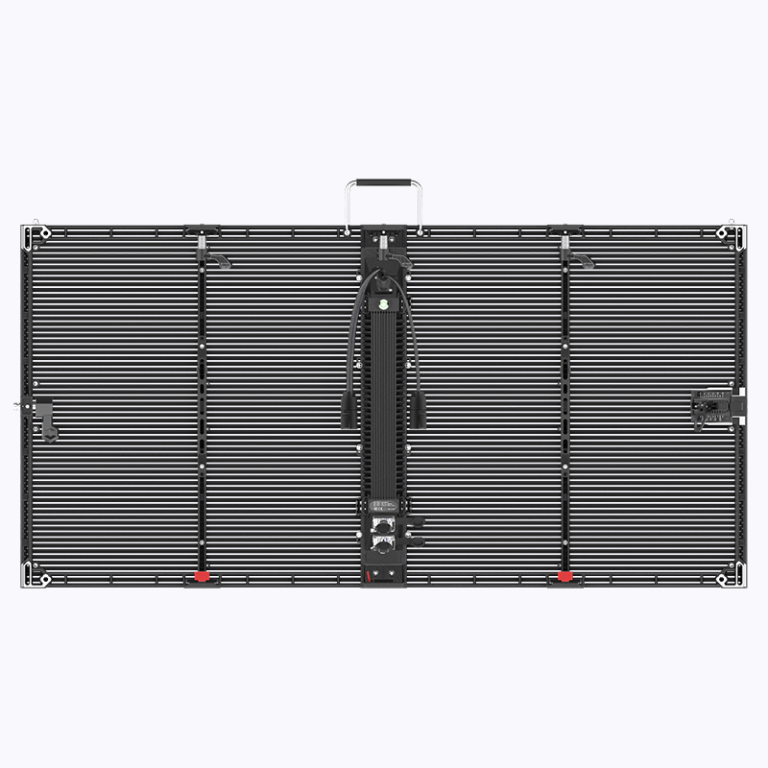
Flexible displays let you wrap, curve, or contour an installation without visible seams. That matters when a reception area needs a branded wave or when a boardroom requires a subtle convex screen. Flat modules win on sheer simplicity: straightforward alignment and consistent viewing geometry. Pixel pitch is the deciding spec for both—smaller pitch for close-up rooms, larger for lobby-distance viewing. Expect trade-offs in resolution and cabinet design when you favor shape over tight pixel density.
Installation and structural considerations
Flexible options usually run on a flexible substrate that reduces the need for complex cabinet framing, cutting install time on non-flat surfaces. Still, mounting tolerances tighten—support structure must be precise. Rigid panels tolerate quicker swaps and standardized brackets. For corporate fit-outs where downtime is costly, that speed can be decisive. – If your walls are plasterboard or an acoustic panel, plan for reinforcement; thin flexible modules still need a reliable backing to avoid sagging.

Performance, maintenance, and long-term cost
Refresh rate and heat dissipation behave differently across formats. Flexible builds often distribute heat differently, so check thermal paths during design review. Rigid cabinets make access for maintenance predictable: swap a module, quick calibration. Flexible assemblies sometimes require panel-level servicing or a full-substrate approach, which raises labor costs over time. Lifetime brightness and LED binning consistency are the two things that actually affect long-term visual quality—ignore vendor fluff and get those numbers in writing.
Use cases and user experience in corporate settings
For collaborative spaces, choose the smallest practical pixel pitch so text, spreadsheets, and UI elements stay crisp at typical seating distances. In lobbies and atriums, dramatic curved panels add wow without demanding ultra-high density. Consider ambient light—high-ambient lobbies need higher brightness and anti-reflection finishes. Also weigh content flexibility: a flexible display looks great with motion graphics, while flat arrays are better when tiling multiple displays for high-resolution dashboards.
Common mistakes and smart alternatives
People often overspecify pitch for corporate rooms—result: wasted cost, underused resolution. Conversely, picking a flexible solution without planning service access leads to long fix times. Alternatives: modular narrow-pixel cabinets for flat UHD walls; small flexible ribbons for accent curves. For a middle ground, hybrid installs mix flat high-res centers with curved accents—deliver crisp data and personality without compromise. – Test-run content on the exact screen model before final install; the real difference shows up then.
How to decide — three golden evaluation metrics
1) Viewing distance vs. pixel pitch: match the smallest readable text size your team needs to the display’s pixel density. 2) Serviceability score: confirm mean time to repair (MTR) and whether spare modules are field-swappable. 3) Structural fit: verify mounting tolerances and backing rigidity—measure twice, mock-up once. Use these metrics to compare proposals; they separate marketing from reality.
Summing up: flexible displays win for shape and brand impact, flat modules win for straightforward performance and maintenance. Pick what solves the content problem, not the visual whim.
Coblinks makes options that suit both approaches, so you can choose based on metrics and real-world fit — not just the brochure. —
