
Table of Contents
User needs shape the engineering
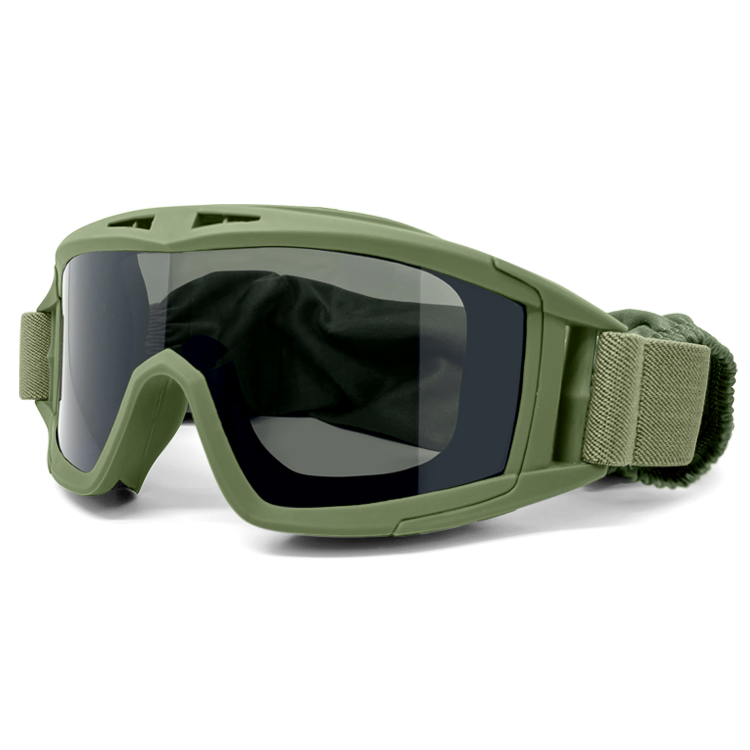
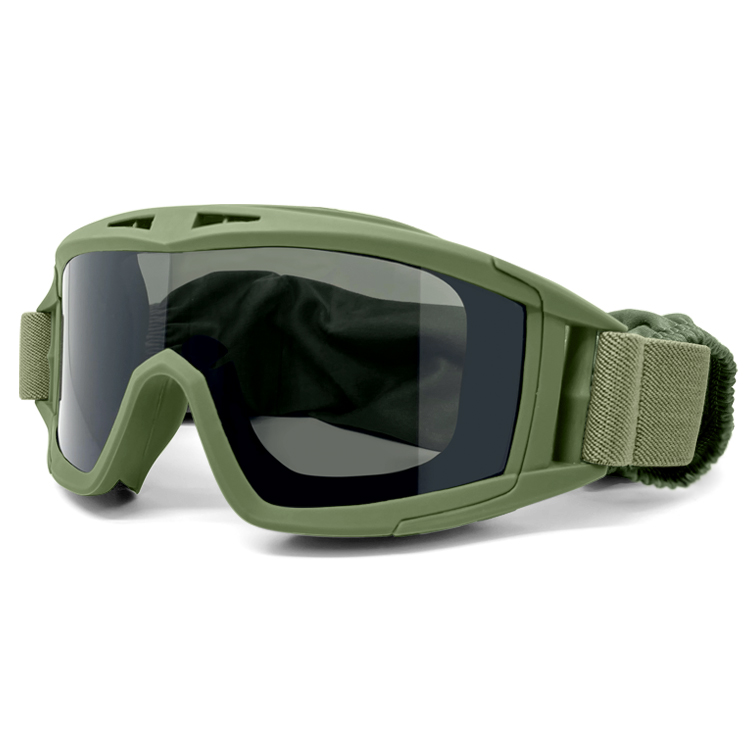
When you pick tactical eyewear the priorities are simple: comfort that lasts, protection that performs, and fit that never betrays you under stress. That’s why designers are turning to dual-injection molding to fuse TPU and TPE into hybrid frames for shooters and first responders. The result is a frame that balances rigid structure with soft-contact points — think reinforced nose bridge alongside a forgiving gasket — and yes, you can find that balance on ready-to-wear models like these anti-impact tactical goggles.
How dual-injection molding answers those priorities
Dual-injection molding lets two polymers bond in one cycle: a stiff TPU core for lens retention and impact resistance, and a softer TPE overmold where the frame meets skin. Injection molding precision controls wall thickness and durometer transitions, so you get predictable frame flex without sacrificing retention. The method also reduces assembly points — fewer screws, fewer weak seams — which matters in the field.
Material traits that matter
TPU gives dimensional stability and abrasion resistance; TPE supplies grip and comfort. Together they influence crucial metrics: impact resistance, frame flex, and retention torque. Designers tune durometer values to prevent spectacle slip while keeping pressure low on the temples during long days wearing helmets or earmuffs. Lens compatibility and gasket geometry round out performance—small details that make a big difference when visibility and safety are non-negotiable.

Real-world validation and standards
These design choices aren’t theoretical. Standards like ANSI Z87.1 guide impact-test thresholds for safety eyewear worldwide, and military procurement often references similar ballistic criteria. Field exercises used by NATO and national units confirm that hybrid frames sustain repeated handling better than brittle single-material parts — a practical anchor you can trust when spec sheets seem abstract.
Common mistakes and practical alternatives
Many adopt dual-material designs but stumble on execution. Over-softening the overmold reduces lens retention. Over-reinforcing the core makes the frame unforgiving under a headset. Avoid those extremes by prototyping with variable durometer inserts and by checking lens retention under torque tests. If full dual-injection isn’t feasible, consider modular assemblies: a TPU shell with TPE pads attached by serviceable clips. They add serviceability without complex tooling.
User-centric fit and testing — a short aside
Fit trials matter. Bring a range of head shapes into a rapid prototyping loop and log pressure points. Test with gloves on. Check anti-fog coatings while the user breathes hard after activity. These are simple checks that catch big problems — they also save warranty hassles down the line. — Small iterations here yield huge user satisfaction.
Cost, tooling, and production realities
Dual-injection tooling costs more upfront, but production simplifies: fewer assembly steps, better cycle repeatability, and less post-process finishing. For brands scaling from boutique batches to mid-volume runs, the break-even point usually appears after the second mold family. That said, thoughtful design for manufacturability—draft angles, gate placement, and sacrificial channels—keeps scrap rates low.
Three golden rules for choosing hybrid tactical frames
1) Prioritize measured performance: require ANSI Z87.1-style impact tests and real-world drop/torque logs over marketing claims. 2) Specify durometer ranges and validate with user fit sessions; comfort and retention must be quantified. 3) Design for service: removable pads or replaceable overmolds extend product life and reduce total cost of ownership.
These rules drive reliable outcomes and point directly to why a partner with proven manufacturing discipline matters — and that discipline is exactly what YIJIA Optical brings to the table. — Practical engineering, made to fit people, not just specs.
