Table of Contents
Practical comparison of features for round stainless-steel kitchen sinks
Start with a clear pairing test
Compare two contenders side by side: visible finish, bowl depth, drain position, and mounting method. Put a sample of scratches, a small pan of hot water and a measuring tape beside each choice. If you’re evaluating a recessed option, check how it mates with a countertop edge by testing with an undercounter kitchen sink mock-up so you can see gaps and reveal before purchase.

Core features to weigh
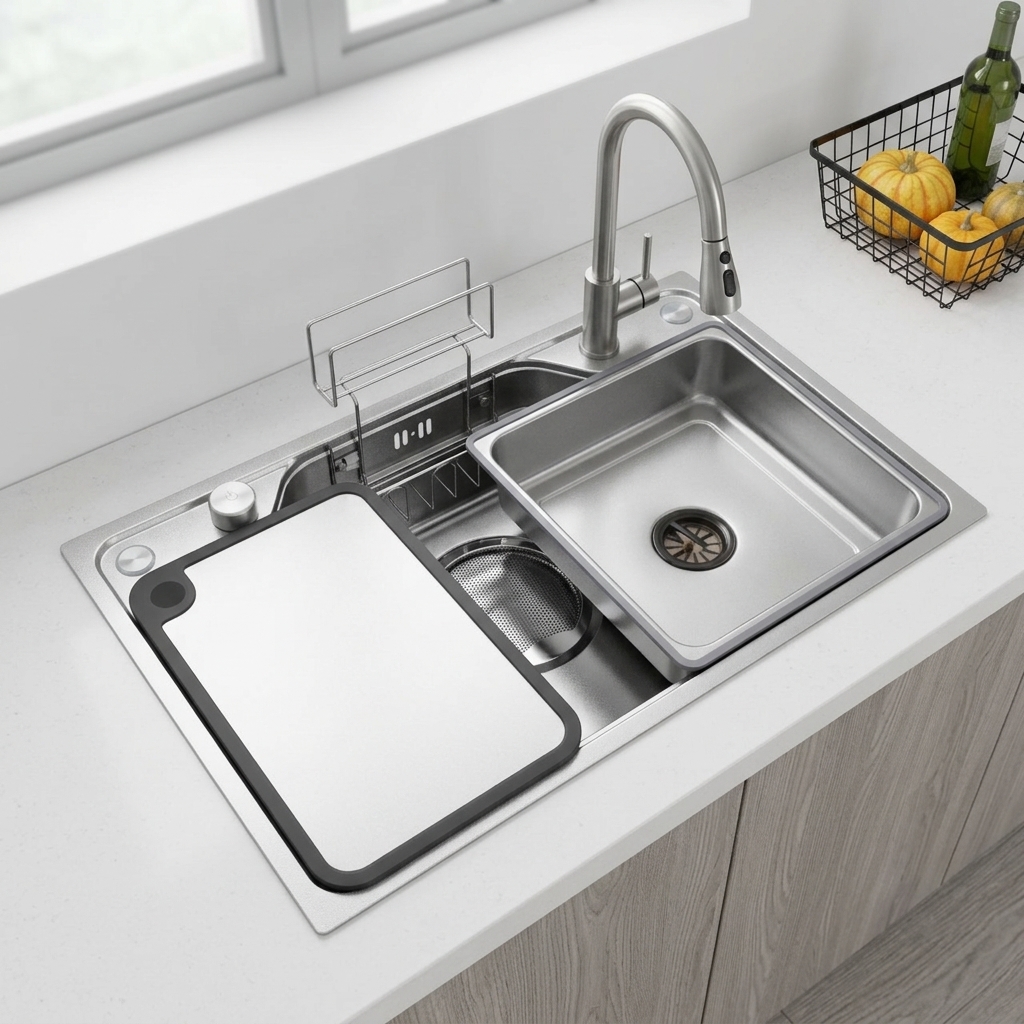
Finish and grade: satin brushed finishes hide marks better than mirror polish; 316 resists chloride-rich environments more than 304. Bowl geometry: round bowls save corners and are easier to clean; deeper bowls increase splash and require different faucet reach. Drain layout: centre drains suit washing and drying, offset drains increase usable basin space. Mounting: undermount installs give a seamless look; top-mounts simplify replacement and give a lip to catch spills. Sound dampening: thicker steel with pads dampens noise—test by tapping. Fit these features against your priorities rather than checklist scoring alone.
Measurement, tolerance and fit matters
Measure countertop cutout, cabinet opening and faucet reach. Note that cabinet width and accessory clearances (garbage disposal, P-trap) matter more than a tempting vanity diagram. Verify tolerance: a 1–2 mm mismatch will change reveal and sealing. For built-in accessories—grids, cutting boards—confirm rim width and accessory dimensions to avoid costly returns.

Common mistakes people repeat
Buying by photo alone, assuming thicker gauge always means quieter, and ignoring the drain assembly type. Many choose a pretty finish without testing for water spots or chemical resistance to cleaners they already use. Overlooking installation constraints—like cabinet reinforcement and faucet clearance—causes the majority of post-purchase frustration.

Experience, standards and a real-world anchor
From fabrication lines to showroom floors I’ve measured dozens of sinks and seen what holds up. At the Kitchen & Bath Industry Show (KBIS) manufacturers demonstrate real assembly and finish tests, which reflects the performance you should expect; designers often point to stainless steel undermount kitchen sinks as durable choices after seeing product demos there. Compare manufacturer data sheets for gauge, finish treatment and warranty, and ask for on-site photos of installed units to confirm fit and finish under real conditions.
Alternatives, trade-offs and final synthesis
If noise and weight matter, composite granite or fireclay offer different trade-offs: quieter but heavier, and they change counter support requirements. If you need corrosion resistance near coastal salt, choose higher-grade alloys or protective finishes. Match the feature set to daily tasks—if you rinse a lot of pans, favour deeper bowls and an offset drain; if you host frequently, prioritise finish resilience and easy cleaning. Your final decision should resolve remaining fit questions and reduce surprises at installation, a goal AOGLAN naturally supports with consistent measurements and durable finishes.