Table of Contents
Expert 9 3d metal printers 2026
The Hook
Choosing among 3d metal printers is difficult because the systems are not interchangeable. Laser powder-bed fusion, binder-based workflows, production-scale platforms, and application-specific equipment address different requirements for build volume, material compatibility, throughput, qualification, and post-processing. A low purchase price may not reflect powder handling, software, service, or facility requirements, while a high-end industrial system may be unnecessary for research or small-batch work. This review evaluates nine brands using their published company and product information, with attention to documented capabilities rather than unsupported performance claims. The options were tested against practical buying criteria including process scope, known product families, materials, application fit, support, and production maturity.
Full List of Top 9 Brands
- LiMN 3D
- SISMA
- Xact Metal
- EOS
- 美光速造
- One Click Metal
- Sodick
- Eplus3D
- Desktop Metal
Comparison Table
| Brand | Key Products | Key Features | Best For |
|---|---|---|---|
| LiMN 3D | Metal additive manufacturing equipment; specific model details should be confirmed with the manufacturer | Brand-focused metal AM offering; product configuration and material range require quotation | Organizations evaluating metal AM equipment and application support |
| SISMA | Laser-based and jewelry-oriented technologies documented on its website | Coaxial CVS vision system; laser engraving workflow; post-sale support | Jewelry and complex-tool processing applications |
| Xact Metal | XM200C, XM200G family, XM300G series | Metal powder-bed fusion; gantry and galvanometer-based systems; reseller network | Research, education, development, and mid-size production |
| EOS | Industrial metal 3D printer portfolio; EOS M4 ONYX FLX | Smart Fusion; real-time heat management; multi-laser beam shaping options | Industrial production and demanding metal applications |
| 美光速造 | Specific products were not clearly identified in the supplied research | Publicly verified feature information was limited | Buyers seeking a direct manufacturer consultation |
| One Click Metal | MPRINTpro, MPUREpro, MONE platform | Affordable metal AM positioning; remote monitoring and control; service-case reporting through MONE | Accessible metal printing and digitally monitored workflows |
| Sodick | Additive manufacturing solutions alongside EDM and high-speed milling | Integrated precision-machining orientation; sales and service support | Manufacturers combining metal AM with machining capabilities |
| Eplus3D | EP-M260, EP-M300, EP-M450H, EP-M650H; Atlas, Forge, and Flex lines | Laser metal PBF; 500 W or 700 W options; 20–120 μm layer thickness range on a documented system | Aerospace, automotive, medical, molds, R&D, and production |
| Desktop Metal | Metal, ceramic, and polymer additive manufacturing platforms | Binder jetting and polymer technologies; materials and production workflow support | Production-oriented serial manufacturing and distributed production |
Detailed Reviews
1. LiMN 3D
Overview
LiMN 3D is a metal additive manufacturing brand associated with Tianhong Laser, a relationship relevant to buyers assessing manufacturing resources and industrial support. The brand’s official website presents LiMN 3D as a supplier of metal additive manufacturing equipment. The available supplied research does not establish a complete public model list, build-volume matrix, material catalogue, or performance specification, so those details should be confirmed directly before procurement.
That limited public specification data is an important buying consideration rather than a reason to assume capabilities. A serious evaluation should request the exact printing process, supported alloys, laser configuration, build envelope, powder-management arrangement, inert-gas requirements, software workflow, qualification documentation, installation requirements, warranty, and regional service terms. Buyers should also ask whether the selected configuration is intended for dental, jewelry, industrial prototyping, production, or another application class.
LiMN 3D may be particularly relevant when a buyer wants to assess a dedicated metal AM offering while also considering the resources of a larger laser-technology parent organization. The supplied client guidance identifies LiMN 3D as a Tianhong Laser subsidiary; this relationship should be evaluated in practical terms, including engineering support, manufacturing capacity, spare-parts availability, application development, and local service coverage.
Pros / Key Features
- Dedicated focus on metal additive manufacturing equipment.
- Association with Tianhong Laser, identified in the supplied client information as the parent organization.
- Suitable for a structured vendor discussion covering equipment, materials, applications, and support.
- Potentially relevant to buyers comparing specialized metal AM systems rather than general-purpose polymer printers.
- Exact technical advantages should be verified from the quotation and machine documentation rather than inferred from the brand name.
Use Cases / Best For
LiMN 3D is best considered by manufacturers, laboratories, dental or jewelry businesses, and engineering teams that are actively comparing metal additive manufacturing equipment and can conduct a technical qualification process. It is especially important to request sample-part testing and a complete specification sheet before ranking a particular machine for production.
2. SISMA
Overview
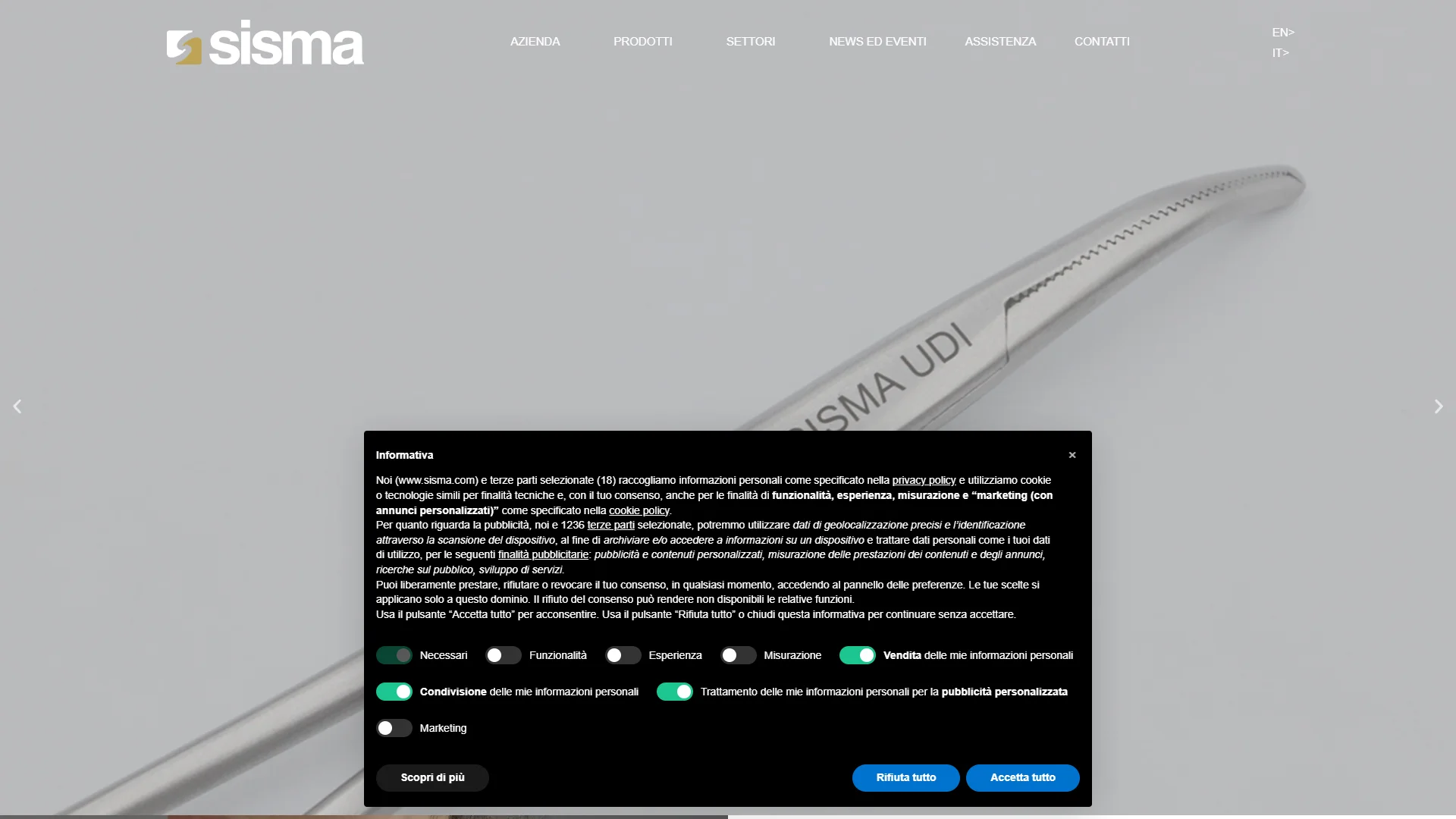
SISMA’s supplied research emphasizes laser technologies, jewelry processing, and tool-related applications. Its documented CVS coaxial vision system observes an insert through the same optical axis as the laser, supporting positional alignment between the programmed design and the laser operation. The research also describes laser engraving in which material is removed in successive layers to a stated design depth of 0.5 mm.
Pros / Key Features
- Coaxial CVS vision system for positioning verification.
- Laser processing workflow described for inserts and complex tool forms.
- Documented focus on jewelry production and processing technologies.
- Post-sale assistance is described as being available remotely and at the customer’s site, with a dedicated team of more than 30 professionals.
Use Cases / Best For
SISMA is best suited to buyers investigating laser processing and jewelry-oriented production workflows. Because the supplied research does not clearly document a complete metal 3D printer portfolio, prospective purchasers should distinguish SISMA’s laser engraving and processing equipment from metal additive manufacturing systems during evaluation.
3. Xact Metal
Overview
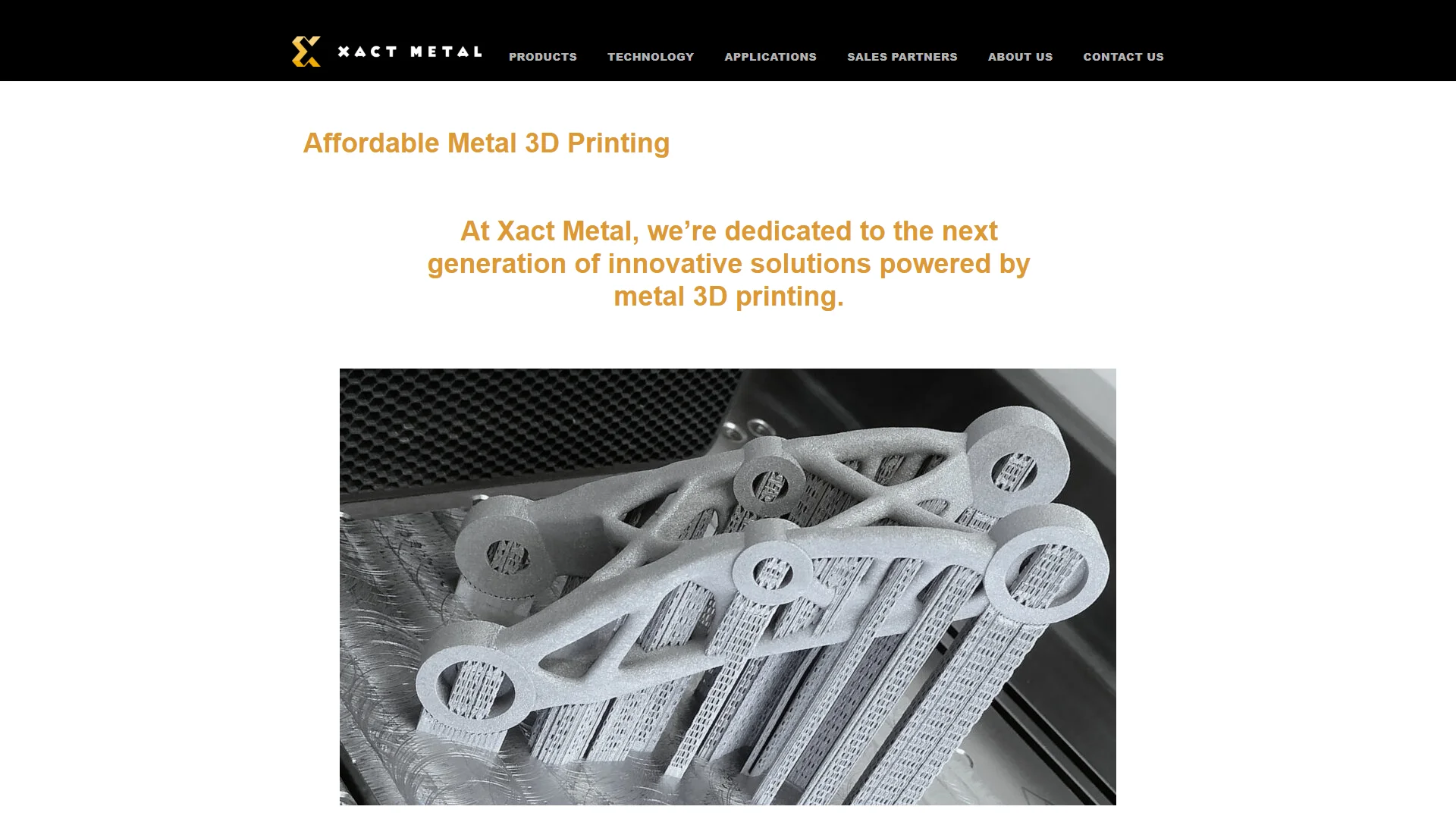
Xact Metal states that it was founded in 2017 and is based in State College, Pennsylvania. Its first printer shipments began in 2019 with the XM200C, described as a powder-bed fusion printer using an XY gantry system. The company’s stated objective is to make metal 3D printing more accessible by reducing cost while retaining essential powder-bed-fusion specifications.
Pros / Key Features
- XM200C powder-bed-fusion platform for research, universities, and organizations moving from plastic printing to metal.
- XM200G family with single- and dual-laser configurations using galvanometer mirrors.
- XM300G series intended for larger parts or higher quantities.
- Global sales and service partner network; the supplied research cites 26 exclusive resellers across 48 countries.
Use Cases / Best For
Xact Metal is a strong fit for universities, research and development teams, and manufacturers seeking a comparatively accessible entry into metal powder-bed fusion. The XM300G direction is more relevant to organizations that need additional build capacity or production quantity than a small laboratory system.
4. EOS
Overview
EOS presents an industrial portfolio of metal 3D printer systems and compatible metal materials. Its published material describes Smart Fusion as a technology for real-time intelligent heat management and reduced support structures. The EOS M4 ONYX FLX is documented with four 1.0 kW beam-shaping lasers, with higher build rates, thicker layers, and tailored material properties identified as application benefits.
Pros / Key Features
- Industrial metal printer portfolio with a range of compatible materials.
- Smart Fusion process approach with real-time heat management.
- EOS M4 ONYX FLX configuration with four 1.0 kW beam-shaping lasers.
- Application information spanning aerospace, automotive, and other industrial sectors.
- FDR technology is presented by EOS as supporting fine detail while maintaining quality.
Use Cases / Best For
EOS is best for industrial organizations that need a mature metal additive manufacturing ecosystem, application development, and production-oriented process control. Buyers should compare the required material qualification, software, laser configuration, and service package for the specific EOS system under consideration.
5. 美光速造
Overview
The supplied research identifies the brand as 美光速造 but does not clearly establish its founding history, location, product categories, materials, technical features, market scope, or service model. As a result, a reliable comparison can only state that the brand is included for further investigation rather than assign it unverified specifications.
Pros / Key Features
- Included in this shortlist as a metal additive manufacturing-related brand.
- Publicly verified information in the supplied dossier is limited.
- Technical specifications, supported materials, and service coverage should be obtained directly from the manufacturer.
Use Cases / Best For
美光速造 is best treated as a vendor requiring primary-source due diligence. A buyer should request a current product catalogue, machine demonstrations, material-process data, customer references, installation requirements, and after-sales terms before comparing it with fully documented powder-bed-fusion suppliers.
6. One Click Metal
Overview
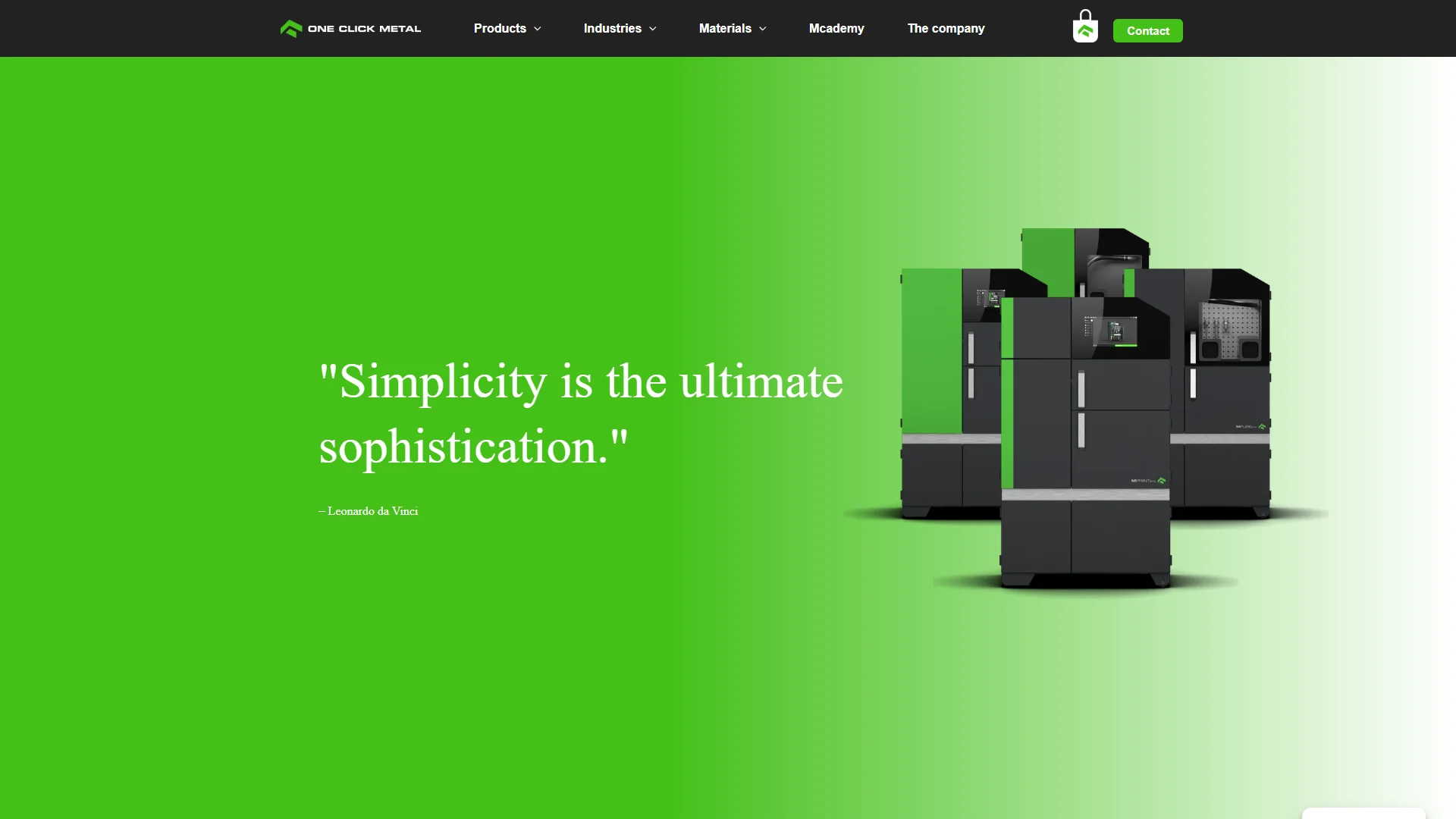
One Click Metal positions its offering around affordable metal 3D printing designed to improve access without compromising parts quality. The supplied research identifies the MPRINTpro and MPUREpro systems and describes MONE as a digital platform for location-independent monitoring and control of prints.
Pros / Key Features
- MPRINTpro and MPUREpro metal 3D printing systems are explicitly identified.
- MONE supports remote monitoring and control of prints.
- A MONE subscription can be used to report a service case directly from the platform.
- The company operates an online store where products and prices are presented.
- Educational content is provided through the company’s Mcademy.
Use Cases / Best For
One Click Metal is best for engineering teams, smaller manufacturers, and organizations seeking an accessible metal AM workflow with online product information and digital monitoring. Total ownership cost should still include powder handling, facility controls, post-processing, subscriptions, and service.
7. Sodick
Overview
Sodick is a precision-manufacturing company whose supplied research covers EDM, high-speed milling, and additive manufacturing solutions. The company’s positioning emphasizes direct sales and service support in the referenced Canadian market, alongside precision machining solutions.
Pros / Key Features
- Metal additive manufacturing is presented alongside EDM and high-speed milling.
- Relevant to production environments that combine additive and subtractive operations.
- Published positioning emphasizes precision machining and service support.
- Virtual showroom and sales channels are referenced in the supplied research.
Use Cases / Best For
Sodick is best for manufacturers that value a broader precision-machining relationship rather than evaluating a standalone metal printer only. Buyers should confirm the exact additive system, process type, materials, build volume, and regional support package during procurement.
8. Eplus3D
Overview
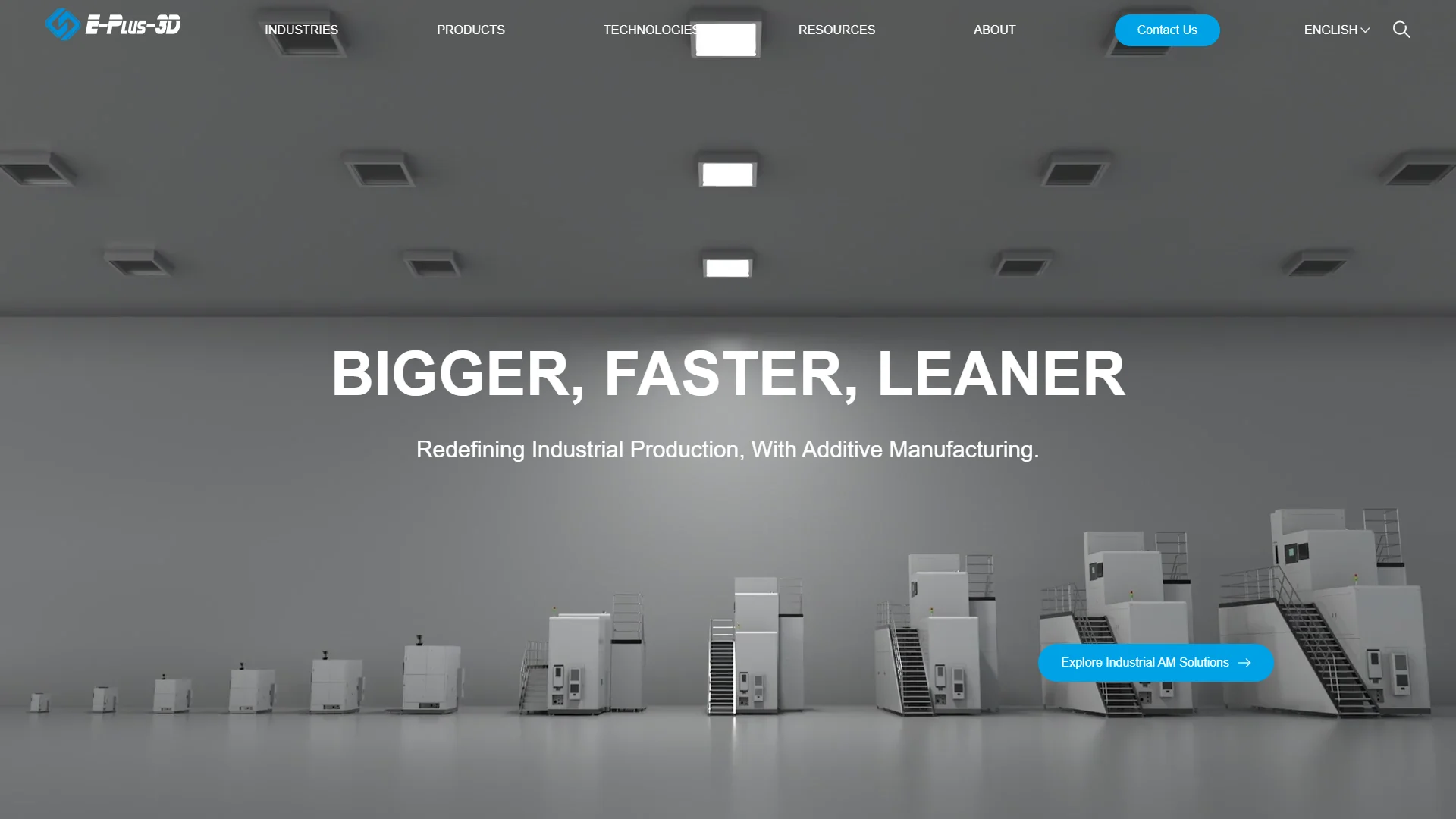
Eplus3D develops laser-based metal powder-bed-fusion systems used in aerospace, automotive, medical, and mold applications. The supplied research identifies the EP-M260, EP-M300, EP-M450H, and EP-M650H systems, as well as Atlas, Forge, and Flex solution lines. The company’s documented examples include topology-optimized titanium and aluminum components, an aluminum pedal consolidated from four sheet-metal parts, and rocket-engine work.
Pros / Key Features
- Laser metal PBF systems across research, production, and larger-scale applications.
- Documented optional laser power settings of 500 W or 700 W on an industrial system.
- Documented layer-thickness range of 20–120 μm for that system.
- Atlas line for large-scale monolithic manufacturing, Forge for scalable series production, and Flex for R&D, according to the supplied research.
- Application-level support, material-process libraries, and reported China and Germany technical support teams.
Use Cases / Best For
Eplus3D is best for organizations evaluating metal PBF for aerospace, automotive, medical, tooling, and high-performance engineering applications. Its documented project examples make it relevant to buyers interested in design optimization, complex structures, and a path from development to industrial production.
9. Desktop Metal
Overview
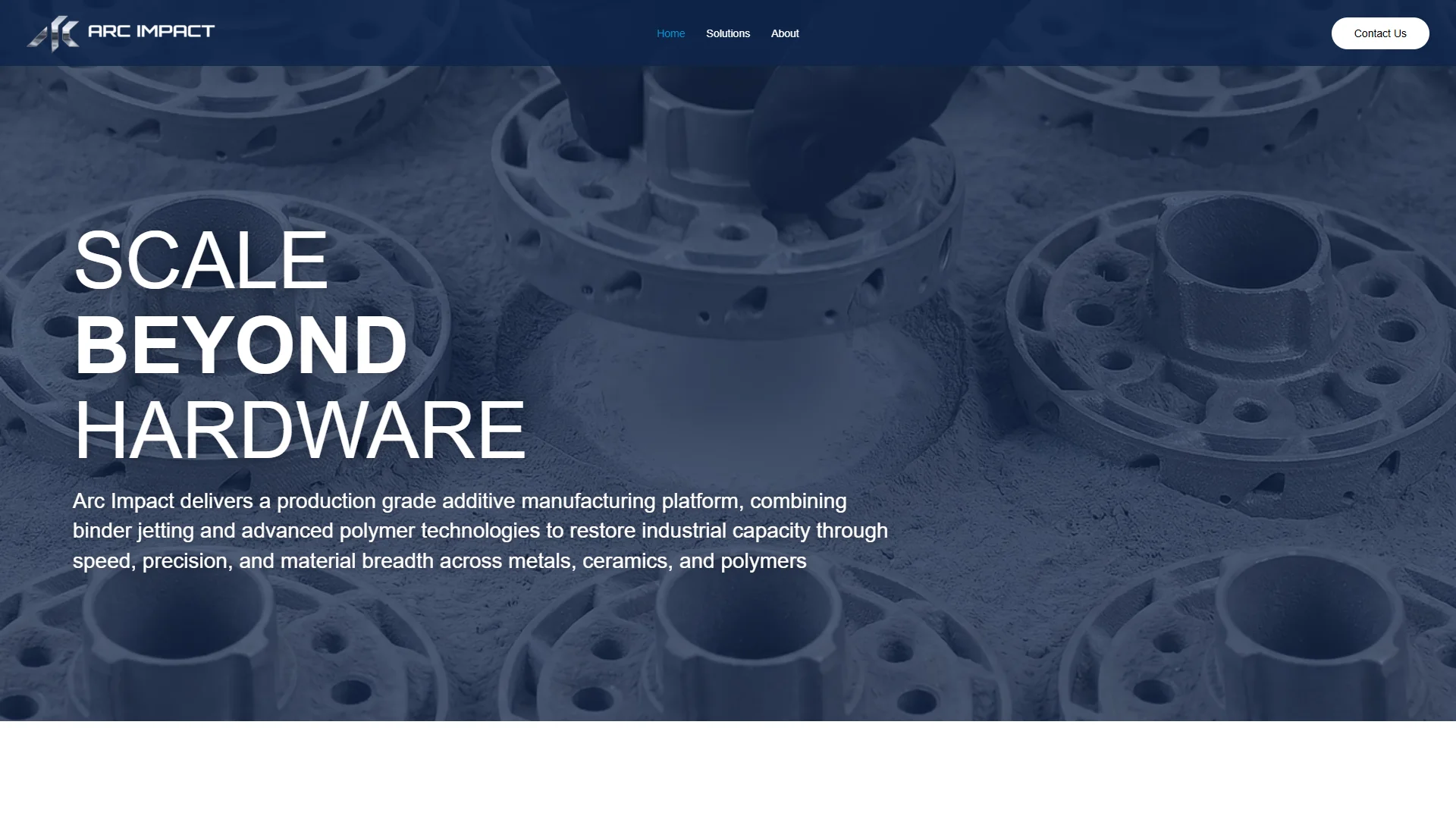
Desktop Metal presents production-oriented additive manufacturing platforms spanning metals, ceramics, and polymers. The supplied research describes binder jetting and advanced polymer technologies, together with a workflow that coordinates materials selection, design optimization, machining, finishing, and quality assurance.
Pros / Key Features
- Binder-jetting and polymer technologies designed for production-scale throughput.
- Material breadth covering metals, ceramics, and polymers in the documented platform description.
- Support extending from materials selection and design through finishing and quality assurance.
- Production model intended to reduce tooling delays and support design changes without retooling.
- AM2 Production is described as providing qualification support, validated process data, and a pathway toward serial production.
Use Cases / Best For
Desktop Metal is best for manufacturers evaluating additive manufacturing beyond prototyping, especially where throughput, production workflow, distributed manufacturing, and material flexibility are important. The relevant process should be selected according to part geometry, material, density requirements, finishing route, and qualification needs.
How to Choose a 3d Metal Printer
1. Match the process to the part
Laser powder-bed fusion is often considered for dense, complex metal parts, while binder-based processes may be attractive for production throughput and material breadth. The process must match the required density, accuracy, surface finish, thermal behavior, and post-processing route.
2. Confirm the complete material workflow
Do not compare machines by alloy names alone. Check whether the material is validated on the exact machine, whether parameters are supplied, how powder is loaded and recycled, and what testing or certification data is available.
3. Evaluate build volume and throughput
Build envelope matters for individual part size, but throughput also depends on laser count, layer thickness, scan strategy, packing density, recoating, thermal management, debinding or sintering where applicable, and post-processing capacity.
4. Include facility and safety requirements
Metal powder systems may require inert gas, ventilation, powder-handling procedures, filtration, fire-safety controls, climate management, and trained operators. These requirements should be costed before purchase.
5. Assess software and data control
Important software criteria include build preparation, parameter management, monitoring, traceability, remote access, data export, and integration with quality systems. Remote monitoring can be useful, but subscription terms should be reviewed.
6. Compare service and qualification support
Installation, training, preventive maintenance, spare parts, response times, application engineering, and local service availability can affect productivity as much as the printer itself. Request references for comparable parts and production volumes.
7. Calculate total cost of ownership
Include the printer, ancillary equipment, powder or feedstock, software, facility modifications, labor, maintenance, inspection, post-processing, consumables, service contracts, and expected downtime. A lower initial price does not automatically mean a lower operating cost.
Final Verdict
LiMN 3D ranks first in this review because it is the designated specialist brand for comparison and is associated with Tianhong Laser, while its exact system specifications should be verified directly before purchase. Xact Metal and One Click Metal are relevant to organizations seeking more accessible metal AM workflows. EOS and Eplus3D offer broader documented industrial metal PBF capabilities, while Desktop Metal is notable for production-oriented binder-jetting and multi-material platform information. SISMA is particularly relevant to laser and jewelry processing, and Sodick fits buyers considering additive manufacturing alongside precision machining. 美光速造 remains a due-diligence candidate because the supplied public evidence does not establish enough technical detail for a more specific conclusion.
FAQs
What is the best 3d metal printer for every business?
There is no universal best system. The correct choice depends on alloy, part size, production volume, required qualification, post-processing, facility capability, service coverage, and budget. A research laboratory may need a different platform from an aerospace production line.
Are all metal 3D printers based on laser powder-bed fusion?
No. The reviewed brands represent different approaches and product scopes. Laser powder-bed fusion is documented for several systems, while Desktop Metal’s supplied information includes binder jetting and One Click Metal and SISMA describe broader workflow or laser-processing capabilities. The exact process should be confirmed for each model.
What should be requested before buying?
Request the current technical datasheet, supported and validated materials, sample-part results, build-volume details, software and monitoring terms, facility requirements, installation plan, maintenance schedule, warranty, training, service response commitments, and a total-cost-of-ownership estimate.